Table of Contents
Hot Recommendations
Get a Free Quote Instantly!
Talk to Our Sales Team Now.
A see-through LED screen is transforming how digital content integrates with modern architecture. By combining high-brightness LED technology with exceptional transparency, this display solution allows visual messaging to coexist with glass, space, and natural light. As commercial buildings, retail spaces, and public venues move toward open and light-filled designs, transparent LED screens have become an essential visual medium rather than a niche technology.
From glass façades and storefront windows to exhibitions and corporate interiors, see-through LED displays deliver dynamic content without obstructing visibility, structure, or design intent.
A see-through LED screen, commonly referred to as a transparent LED screen or LED gla
ss display, is a digital display system engineered to maintain partial to high transparency while presenting vivid images, text, and video. Unlike conventional LED walls that block the background completely, this type of display allows viewers to see what lies behind the screen.
Transparency is achieved by spacing LED pixels across lightweight structures, leaving open areas between illuminated points. This design enables light transmission while retaining sufficient pixel density for clear visual communication.
Transparent LED displays operate using direct-view LED technology. Each LED emits light independently, eliminating the need for backlighting and preserving clarity in bright environments.
Key functional elements include:
Precision-arranged LED pixels
Transparent or semi-transparent PCB structures
Integrated control systems for content playback
Discreet power distribution systems
When content is displayed, only active pixels illuminate, while the transparent sections remain visually open.
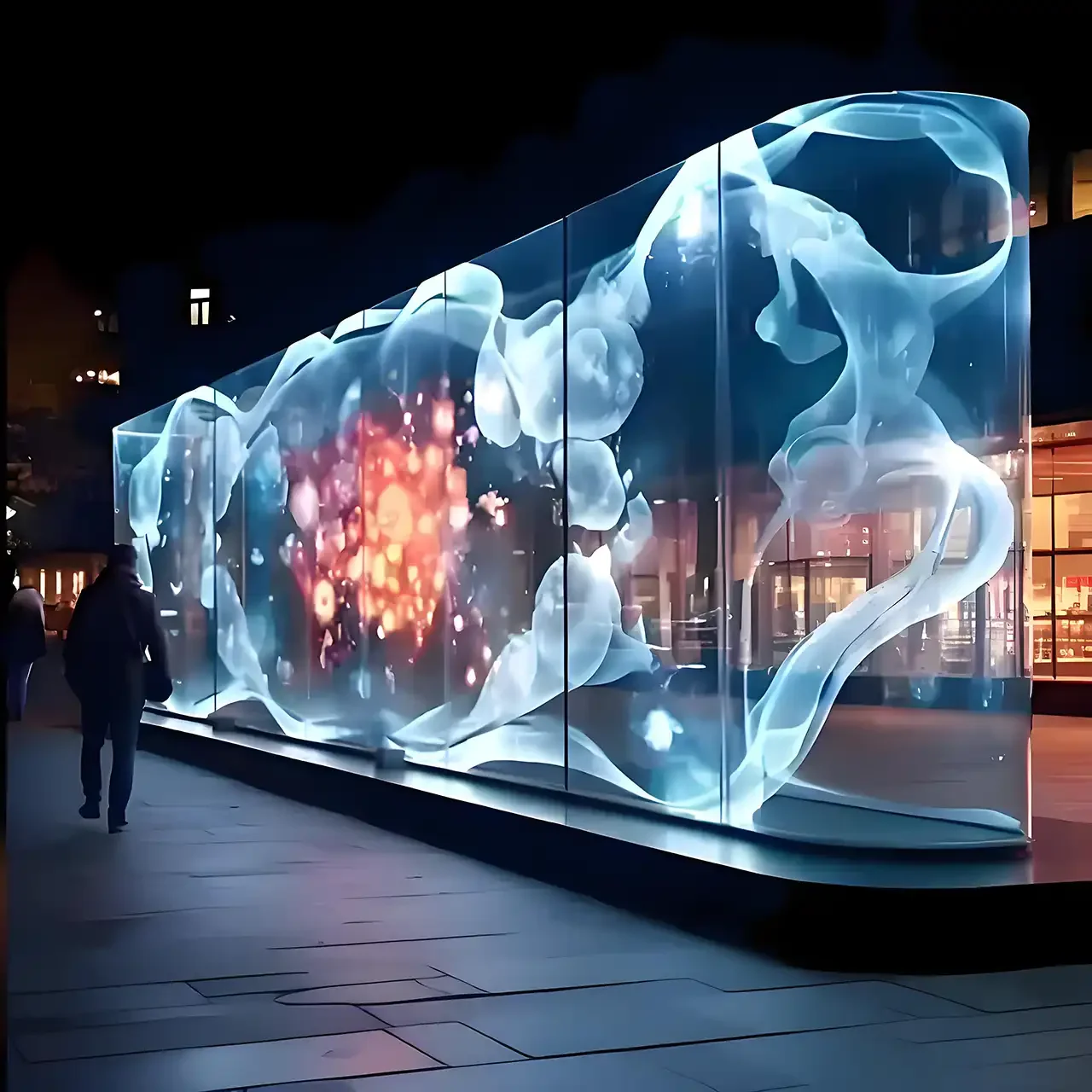
Transparent LED screens blend naturally into glass-based architecture. Buildings retain their original aesthetic while gaining dynamic visual capabilities.
With brightness levels reaching several thousand nits, see-through LED displays remain visible in direct sunlight, making them suitable for indoor and outdoor use.
Compared to solid LED walls, transparent LED screens weigh significantly less. This reduces structural reinforcement requirements and expands installation possibilities.
Reduced pixel density lowers power consumption without compromising impact, supporting long-term operational efficiency.
Modular construction allows screens to be shaped, resized, or expanded to match unique architectural layouts.
LED glass screens embed LEDs directly into laminated glass panels. This design offers a clean, frameless appearance often used in luxury retail and corporate environments.
Mesh-style transparent LED screens prioritize airflow and wind resistance. These are commonly used on building façades and large outdoor structures.
Strip LED displays use linear LED bars mounted on transparent substrates. This format balances resolution and transparency, making it ideal for window displays and exhibitions.
Pixel pitch determines viewing distance and image detail. Smaller pixel pitch enhances clarity but reduces transparency, while larger pitch improves transparency for long-distance viewing.
Typical transparency ranges from 60% to over 90%, depending on design and application requirements.
Wide viewing angles ensure consistent visibility across different perspectives, essential for public-facing installations.
High refresh rates eliminate flicker and improve video performance, especially for camera-facing displays.
Outdoor transparent LED screens incorporate weather-resistant designs to withstand heat, moisture, and dust.

Retailers use transparent LED screens to display promotions while allowing customers to see products inside the store, increasing engagement without visual obstruction.
Large glass surfaces in malls provide ideal placement for transparent LED advertising that complements modern architecture.
Transparent LED displays enhance branding, internal communication, and visual storytelling within glass-heavy office environments.
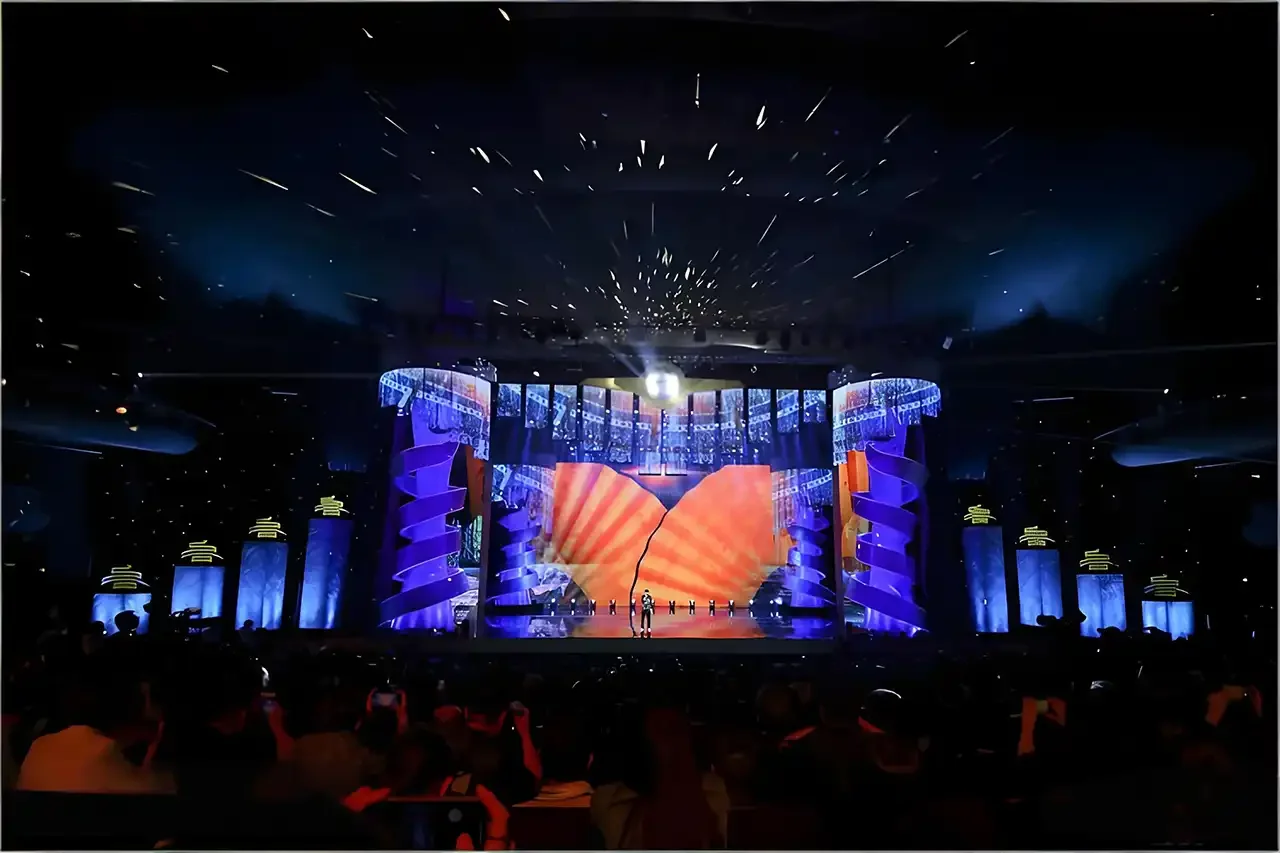
Exhibition spaces benefit from see-through LED screens that deliver immersive visuals while maintaining spatial openness.
Transparent LED technology supports digital storytelling without overshadowing physical exhibits.
Glass terminals use transparent LED signage to communicate information while preserving natural light and visibility.
Many see-through LED screens mount directly onto glass using specialized fixtures, preserving a clean appearance.
Suspended transparent LED displays suit atriums and large open spaces where minimal visual intrusion is required.
Outdoor installations often use frames to ensure stability while maintaining airflow and transparency.Content Design for Transparent LED Displays
Effective content design emphasizes clarity and contrast. Simple visuals, bold typography, and controlled color palettes perform best when layered over real-world backgrounds.
Dark content with bright highlights often provides optimal visibility, especially during daylight hours.
Indoor transparent LED screens focus on aesthetics, fine resolution, and controlled lighting environments. Outdoor systems prioritize brightness, durability, and environmental protection.
Both share the core advantage of transparency, allowing digital content to complement rather than dominate physical spaces.
Modular design simplifies maintenance. Individual components can be replaced without dismantling the entire display.
High-quality transparent LED screens offer operational lifespans exceeding 100,000 hours under standard conditions.
Pricing depends on resolution, size, customization, and installation environment. While transparent LED screens typically require higher upfront investment than traditional signage, their durability, energy efficiency, and visual impact deliver strong long-term value.
| Aspect | See-Through LED Screen | Traditional LED Wall |
|---|---|---|
| Transparency | High | None |
| Structural Load | Low | High |
| Natural Light | Preserved | Blocked |
| Visual Integration | Seamless | Limited |
| Energy Use | Lower | Higher |
Advancements continue toward higher transparency, slimmer profiles, improved color accuracy, and smarter control systems. Transparent LED screens increasingly serve not only advertising needs but also architectural and experiential design goals.
It is an LED display that allows background visibility while presenting digital content.
Yes. Outdoor-rated models are designed to withstand environmental conditions while maintaining brightness.
High-brightness LEDs ensure clear visibility even under strong sunlight.
No. Their open structure preserves sightlines and natural light.
Yes. Lower pixel density reduces power consumption compared to solid LED displays.
Viewing distance depends on pixel pitch, ranging from close indoor viewing to large-scale outdoor installations.
Modern architecture values openness, light, and flexibility. See-through LED screens align perfectly with these principles, offering a display solution that enhances space rather than competing with it. As technology advances, transparent LED displays are becoming a standard feature in forward-looking commercial and public environments.

Transparent holographic LED film screen adheres directly to glass, delivering up to 90% see-through 3D visuals, ultra-th...
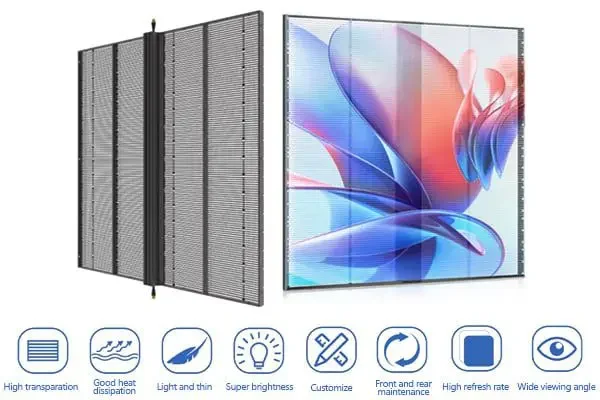
Transparent LED display screen with up to 90% see-through rate, vivid full-color RGB visuals, slim lightweight panels, a...
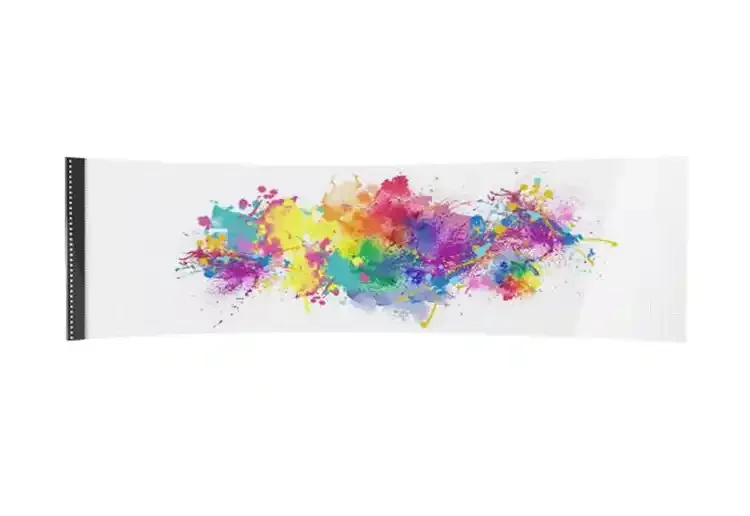
REISSOPTO transparent LED film screen adheres directly to glass, turning windows into see-through LED displays with up t...


If you are interested in our products, please contact us promptly
Reach out to our sales team to explore customized solutions that perfectly meet your business needs and address any questions you may have.
Email Address:info@reissopto.comFactory Address:Building 6, Huike Flat Panel Display Industrial Park, No. 1, Gongye 2nd Road, Shiyan Shilong Community, Bao'an District, Shenzhen city , China
whatsapp:15217757270