



































What is the LED Screen
LED screens are digital display technologies that have revolutionized visual communication, marketing, entertainment, and information delivery. Known for their brightness, color accuracy, scalability, and flexibility, LED screens are used across indoor and outdoor environments to engage audiences with dynamic visual content. Understanding the principles, types, applications, and benefits of LED screens helps professionals, designers, and businesses select appropriate solutions for their needs.
Definition of an LED Screen
An LED screen, also referred to as a light-emitting diode display, is a flat or flexible surface composed of multiple LED modules arranged in a matrix. Each LED module contains numerous diodes that emit light when electric current passes through them. The combination of these diodes forms a visual display capable of producing text, images, video, or animated graphics.
Key aspects include:
Pixel arrangement: The smallest unit of a display, controlling brightness and color.
Modularity: LED screens are often constructed from panels or cabinets for easy scaling.
Brightness and color uniformity: Ensures visibility in various lighting conditions.
Control systems: Manage content, signal processing, and synchronization.
LED screens differ from LCD and OLED screens in terms of structure, brightness, viewing angles, and scalability. Unlike LCDs, which rely on backlighting, LED screens produce light at the source, resulting in higher brightness and better outdoor performance.
How LED Screens Work
LED screens function through a network of red, green, and blue (RGB) diodes. By adjusting the intensity of each diode, the screen generates a wide range of colors. This is commonly known as additive color mixing.
Basic Components:
LED Module: Contains multiple diodes arranged in a grid.
Cabinet: Holds the modules together and provides structural support.
Power Supply: Ensures consistent voltage and current.
Control System: Receives video input and distributes signals to each module.
Cooling System: Prevents overheating and ensures long-term performance.
Signal Processing:
The input signal is processed through a control system that converts the data into commands for each LED pixel. Advanced systems support live video feeds, animations, and real-time content adjustments.
Types of LED Screens
LED screens vary according to pixel pitch, structure, application, and flexibility.
1. Indoor LED Screens
Fine-pitch: Pixel pitch typically ranges from 1.2 mm to 4 mm.
Applications: Conference rooms, exhibitions, TV studios, corporate events.
Characteristics: High resolution, close viewing distances, low brightness requirements.
2. Outdoor LED Screens
Coarser pixel pitch: 4 mm to 20 mm or more, optimized for long-distance viewing.
Applications: Billboards, stadiums, highway displays.
Characteristics: High brightness, weatherproofing, UV resistance.
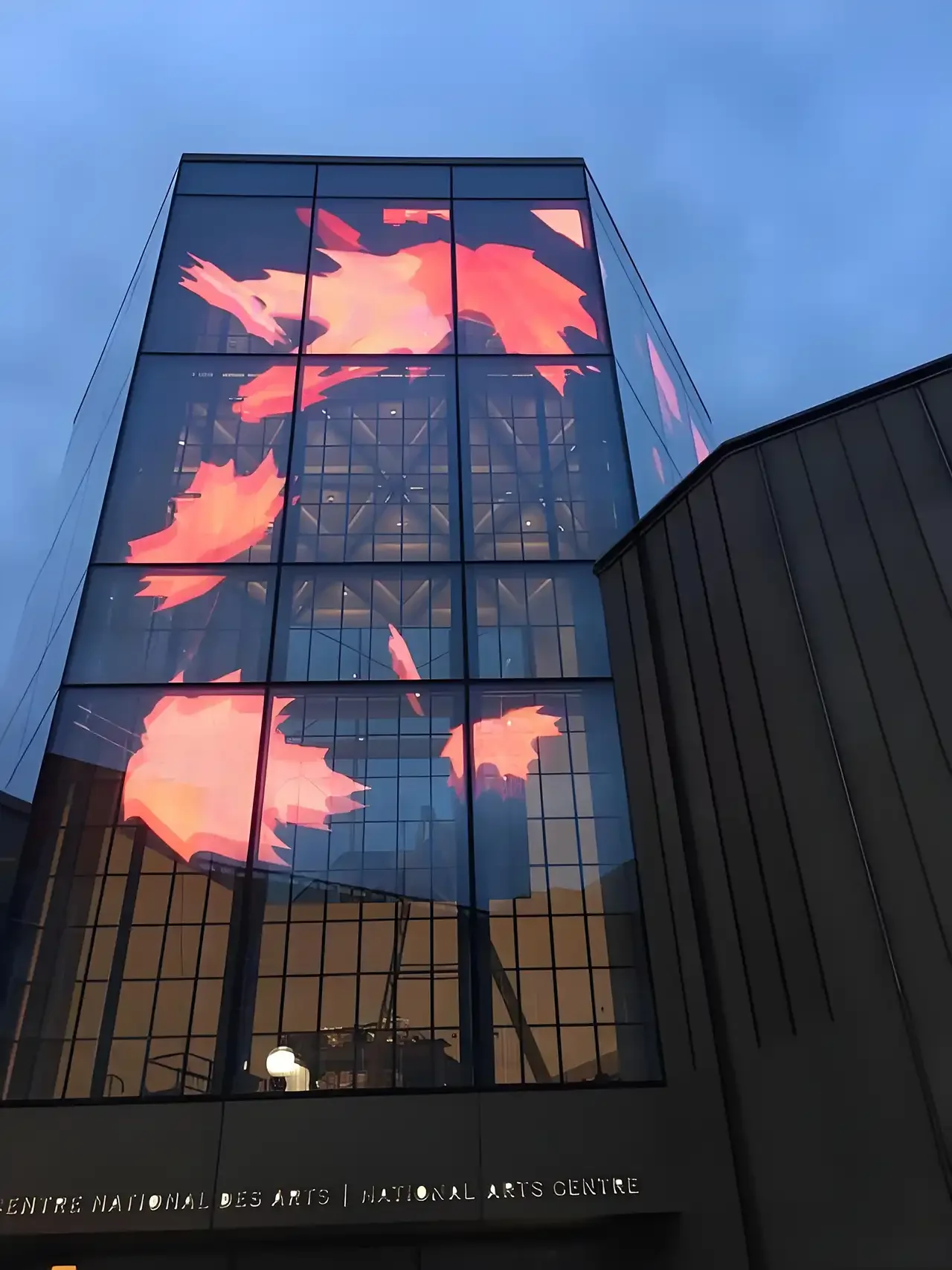
3. Curved and Flexible LED Screens
Allow cylindrical, concave, convex, or wave-like designs.
Used in creative stage design, architectural facades, and immersive exhibitions.
Flexible modules enable smooth curvature without compromising resolution.
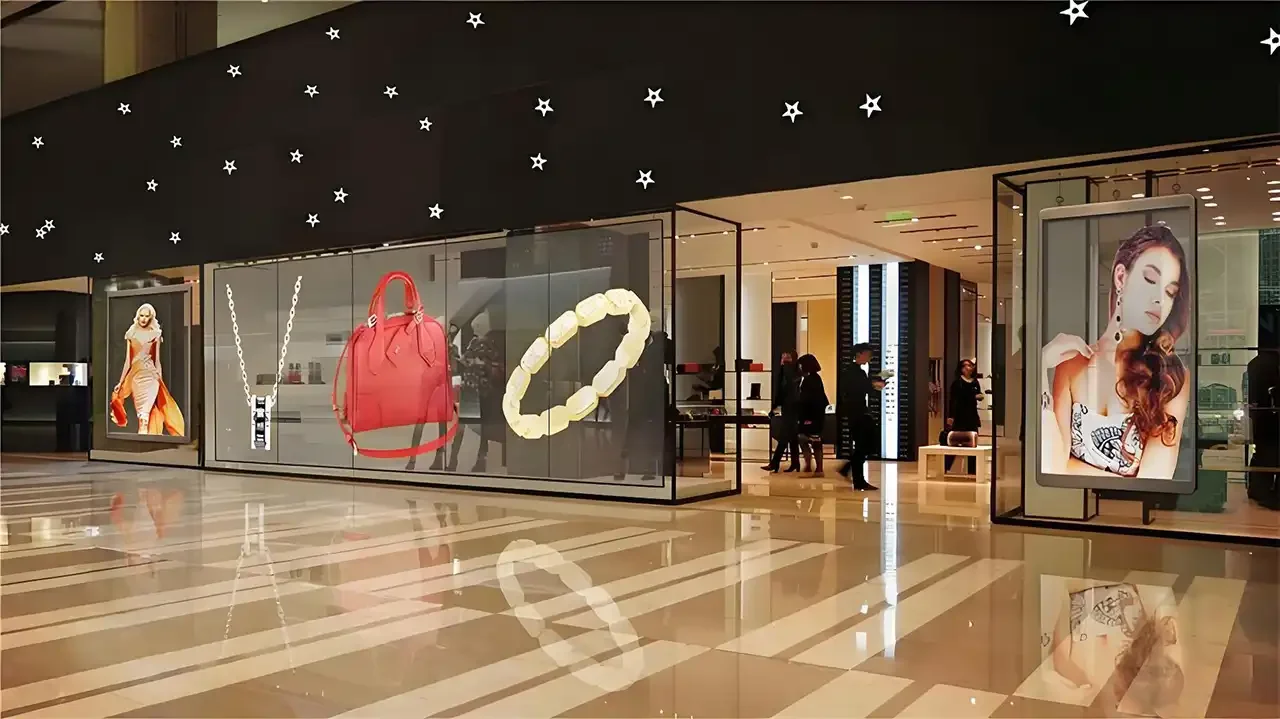
4. Transparent LED Screens
Integrate into glass facades or shop windows.
Enable visibility through the display while projecting digital content.
Commonly used in retail and commercial branding.
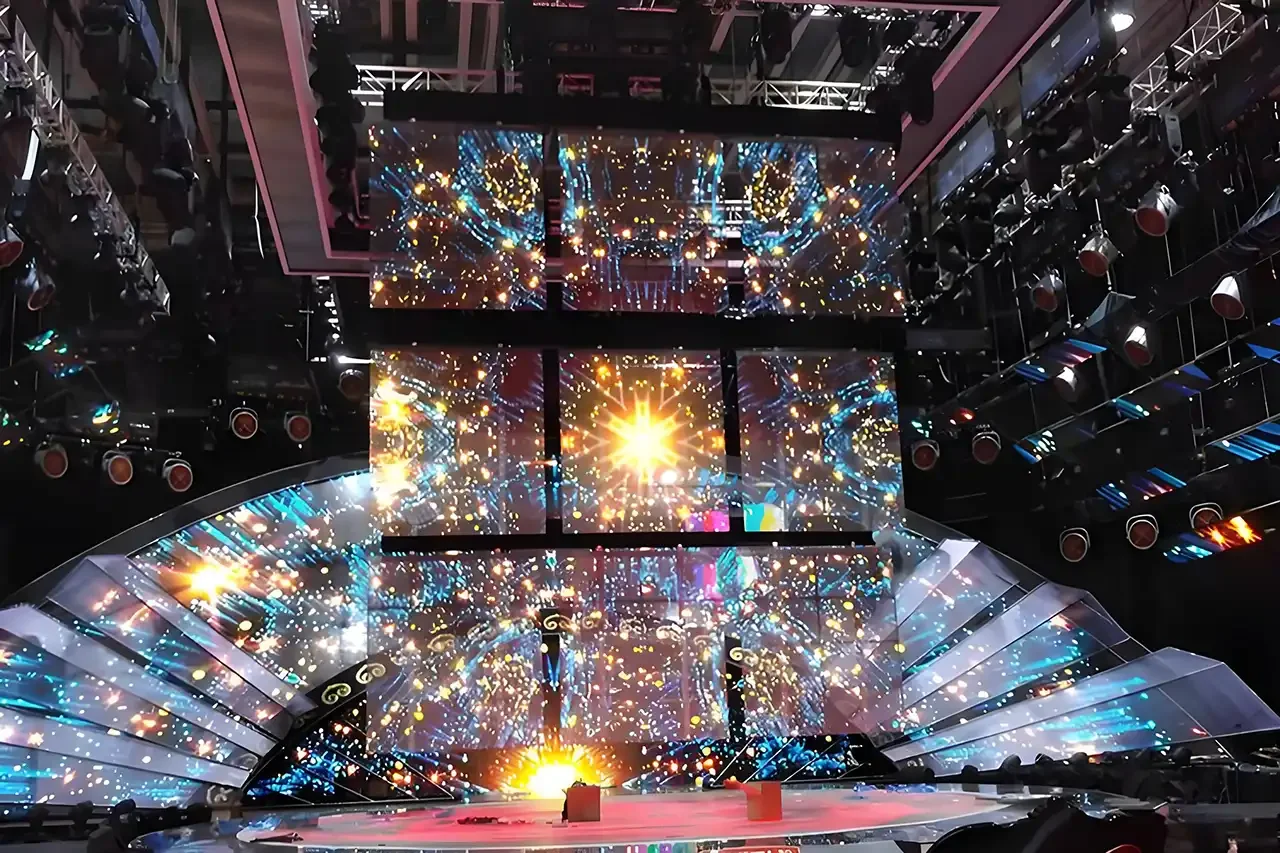
5. LED Video Walls
Modular displays arranged to create massive screens.
Often used in concerts, control rooms, large exhibitions.
Multiple panels combine seamlessly to form continuous high-resolution images.
Advantages of LED Screens
LED screens offer several benefits over traditional display technologies:
High Brightness: Suitable for daylight and outdoor conditions.
Wide Viewing Angles: Ensures visibility from multiple perspectives.
Scalability: Panels can be combined to create extremely large displays.
Durability: Resistant to environmental challenges with proper design.
Dynamic Content: Supports text, video, animation, and interactive visuals.
Energy Efficiency: Advances in LED technology reduce power consumption.
Applications of LED Screens
Advertising and Marketing
Outdoor LED screens dominate the digital billboard industry, providing high-impact visuals at high-traffic locations. Their dynamic nature allows brands to change campaigns in real time and tailor messages for targeted audiences.
Entertainment and Events
LED screens are integral in concerts, theaters, live shows, and sporting events. They enhance the stage environment, create immersive experiences, and synchronize visuals with lighting and audio.
Corporate Communication
In office environments, LED screens serve as presentation walls, video conferencing backdrops, and interactive information displays. They improve visibility and engagement for internal and external audiences.
Transportation and Public Spaces
Airports, train stations, and metro hubs use LED screens for real-time information, announcements, and wayfinding. Outdoor LED displays ensure visibility under bright daylight conditions.
Retail and Hospitality
Transparent and curved LED screens enhance storefronts, hotels, and restaurants by delivering digital content without obstructing physical space. They attract customers and create memorable brand experiences.
Technical Considerations
Pixel Pitch and Resolution
The pixel pitch determines the display’s optimal viewing distance. Smaller pitch values provide higher resolution suitable for close viewing, while larger pitches are ideal for long-distance viewing.
Brightness and Contrast
Indoor: 800–1,500 nits.
Outdoor: 5,000–10,000 nits to combat sunlight.
High contrast ratios improve readability and image depth.
Refresh Rate and Color Depth
High refresh rates reduce flicker in camera recording or live streaming.
16-bit or 18-bit color depth enables richer visuals and smooth gradients.
Maintenance and Reliability
Modular designs allow quick replacement of faulty panels.
Regular calibration maintains color consistency.
Weatherproofing and cooling systems prolong lifespan.
Installation and Structural Design
Indoor: Lightweight frames, ceiling or wall mounts, minimal structural load.
Outdoor: Reinforced frames, wind load calculation, waterproofing, UV-resistant materials.
Proper installation ensures safety, visual quality, and long-term durability.
LED Screen Trends
Micro-LED: Smaller pixels, higher resolution, longer lifespan.
Flexible and Curved Modules: Organic shapes, architectural integration.
Interactive Screens: Touch, motion, and gesture-based content.
AI-assisted Content Management: Automated content scheduling, audience analytics.
Energy Efficiency Improvements: Reduced power consumption and environmental impact.
Frequently Asked Questions
How does an LED screen differ from LCD or OLED?
LED screens emit light per pixel, providing higher brightness and better outdoor visibility. LCDs rely on backlights, and OLEDs are self-emissive but often less bright for large-scale installations.
Can LED screens be curved?
Yes, modular or flexible LED modules allow concave, convex, cylindrical, and free-form shapes for indoor and outdoor applications.
What is the typical lifespan of an LED screen?
High-quality LED screens can operate for 50,000–100,000 hours, depending on usage, brightness, and environmental conditions.
Are LED screens energy-intensive?
Energy consumption varies by brightness, pixel density, and usage time. Advances in LED efficiency have reduced power needs significantly.
How large can an LED screen be?
LED screens are modular, allowing virtually unlimited size for indoor and outdoor installations, from small signage to stadium-sized video walls.
Is content on LED screens customizable?
Yes, LED screens support dynamic content, real-time updates, animations, live feeds, and interactive media.
Conclusion
An LED screen is a versatile and high-impact digital display system capable of transforming visual communication across industries. From indoor corporate presentations to massive outdoor billboards and immersive entertainment stages, LED screens provide unmatched brightness, color quality, scalability, and durability. Their modular and flexible designs allow for curved, transparent, and interactive layouts, making them a central tool in modern digital environments. As LED technology advances, future displays will continue to offer more immersive, energy-efficient, and creatively flexible solutions for any viewing context.