



































LED Screen Price Explained: Costs & Buying Tips
What Determines LED Screen Price?
LED screens vary widely in price because they are not one-size-fits-all products. Understanding the factors that influence costs ensures you get the right display for your needs.
Display Size and Resolution
The physical size of an LED screen is one of the main cost drivers. Larger panels require more materials, LEDs, and engineering precision:
Small indoor LED panels for signage are usually more affordable.
Large outdoor billboards or stadium screens are significantly more expensive.
Resolution also plays a key role. Higher pixel density means more LEDs per square meter, leading to higher LED screen price.
Pixel Pitch (P Value)
Pixel pitch measures the distance between two adjacent pixels. Smaller pitch = higher resolution = better image clarity = higher cost.
P1.2–P2.5: Indoor, close-view displays.
P3–P8: Indoor/outdoor mixed use.
P10+: Outdoor signage for distant viewing.
Indoor vs Outdoor LED Displays
Outdoor LED screens need:
Weatherproofing
High brightness for daylight visibility
UV-resistant materials
Stronger structural support
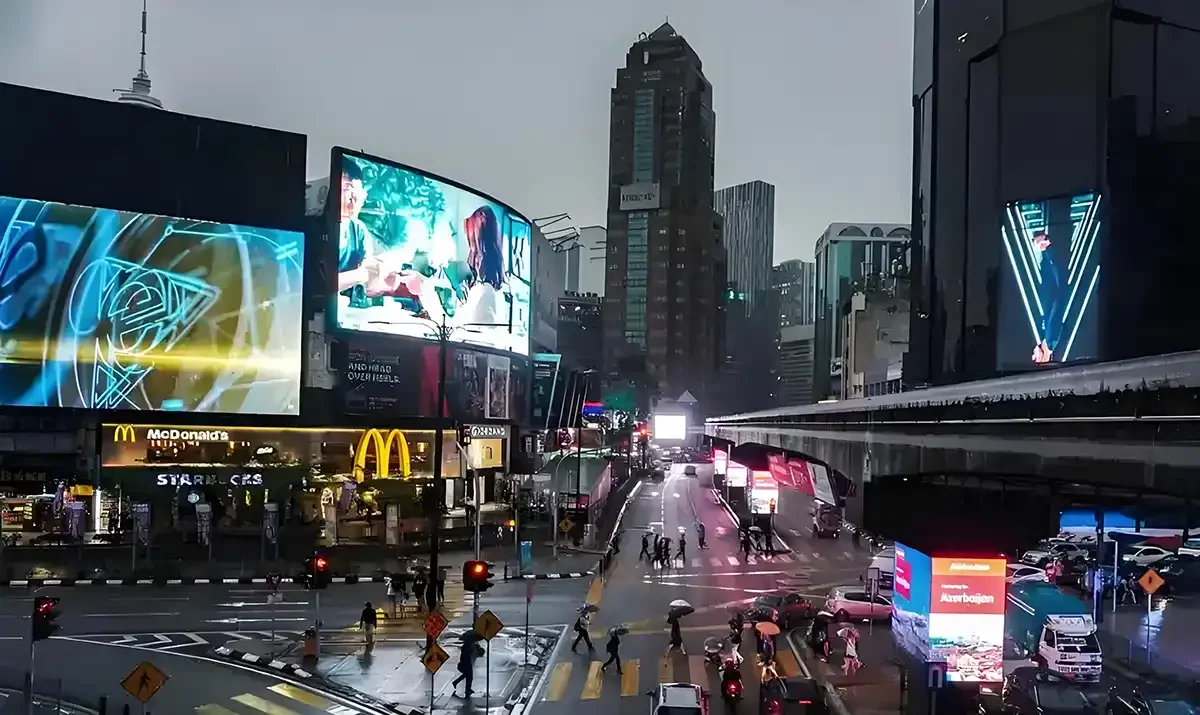
These features increase LED screen price compared to indoor panels.
Panel Technology: SMD vs COB
SMD (Surface Mounted Device): Common, versatile, used indoors and outdoors.
COB (Chip on Board): Newer, with better heat dissipation and reliability. COB panels often cost more.
Brand and Quality
Well-known brands invest in quality control, reliability, and performance consistency. Generic or lower-tier brands are cheaper but may have shorter lifespan, poorer color accuracy, or weaker support.
Typical LED Screen Price Ranges in 2026
Pricing varies by size, resolution, and use case. Here’s a realistic overview.
Small Indoor LED Panels
| Type | Application | Price (USD/m²) |
|---|---|---|
| Basic | Retail signs, simple displays | $300–$800 |
| Mid-range | Conference rooms, shops | $800–$1,500 |
| High-definition | TV studios, graphics | $1,500–$3,000+ |
Large Indoor LED Walls
Standard indoor wall: $1,200–$2,500/m²
Fine pitch/high-resolution: $2,500–$5,000/m²+
Outdoor LED Displays
| Application | Price (USD/m²) |
|---|---|
| Standard billboard | $1,500–$3,000 |
| High-brightness outdoor display | $3,000–$7,000 |
| Large stadium screen | $7,000–$12,000+ |
Specialty LED Displays
Flexible, transparent, or custom-shaped LED panels: $5,000–$20,000+/m² depending on complexity.
Comparing LED Screen Quotes
Price alone doesn’t capture value. Consider:
Warranty and Support
Warranty length: 2–5 years typical
On-site service and spare parts availability
Shipping and Installation
Freight charges
Assembly labor
Mounting hardware
Power and Maintenance
Energy consumption
Accessibility for repair
Modular designs for easy maintenance
Cost-Saving Strategies Without Sacrificing Quality
Appropriate resolution: Lower pixel density is fine for distant-view applications.
Direct manufacturer purchase: Eliminates middlemen.
Refurbished or demo units: Good for indoor use.
Scalable installation: Start small, expand later.
Understanding Price Per Square Meter
The price per square meter metric is common, but context matters. Two panels at the same cost may have different:
Pixel pitch
Brightness (nits)
Refresh rate
Viewing distance
Contrast ratio
High-brightness, high-refresh-rate screens usually perform better despite higher per m² cost.
LED Screens vs Alternative Technologies
LCD Video Walls
Cheaper upfront
Narrower viewing angles
Lower outdoor brightness
Visible bezels
Projection Systems
Affordable but affected by ambient light
Shorter lifespan bulbs
Limited contrast
LED screens provide seamless visuals, higher brightness, and better durability.
Hidden Costs
Structural support: Frames, trusses, mounting rails
Electrical upgrades: High-wattage screens may require power upgrades
Content management systems: Media players, software, network
Permitting fees: Especially for outdoor displays
Real-World Examples
Retail Environment
3m × 2m (6 m²), P3 indoor LED
Price: 6 × $1,500 = $9,000
Outdoor Billboard
10m × 5m (50 m²), P8 high-brightness
Price: 50 × $3,500 = $175,000
Event Stage
20 m² fine pitch, high refresh
Price: 20 × $2,800 = $56,000
LED Screen Price Over Time
Production efficiencies have reduced unit costs.
Higher-resolution panels are more affordable.
Smart system integration increases value but can affect price.
Total Cost of Ownership (TCO)
Energy consumption: Daily operation + brightness
Maintenance: Modular designs simplify repairs
Lifespan: 7–10 years typical
Questions to Ask Before Buying
Is the pixel pitch suitable for viewing distance?
Indoor or outdoor use?
Warranty and support included?
Installation/shipping included?
Power and maintenance costs?
Future Trends
Mini-LED and Micro-LED technology
AR/VR integration
AI-driven content adaptation
Energy-efficient materials
Choosing the Right Supplier
Look for:
Clear documentation
Installation support
Responsive service
Transparent pricing
FAQ – LED Screen Price
1. Why does LED screen price vary so much?
Price depends on size, resolution, pixel pitch, indoor/outdoor use, brand, and technology. Higher-quality, large, or outdoor screens cost more.
2. Are outdoor screens more expensive than indoor screens?
Yes. Outdoor screens need weatherproofing, UV protection, and higher brightness, which increase costs.
3. How does pixel pitch affect price?
Smaller pixel pitch = higher resolution = clearer image = higher price.
4. Can I reduce cost without compromising quality?
Yes. Options include lower resolution for distant-view screens, buying direct from manufacturers, or choosing refurbished panels.
5. What hidden costs should I consider?
Structural support, electrical upgrades, content management systems, and permits can increase total investment.
6. Is price per square meter the best comparison metric?
Not always. Consider technical specs like brightness, refresh rate, contrast ratio, and viewing distance.
7. How long do LED screens last?
High-quality LED screens typically last 7–10 years, with modular designs reducing maintenance costs.
-
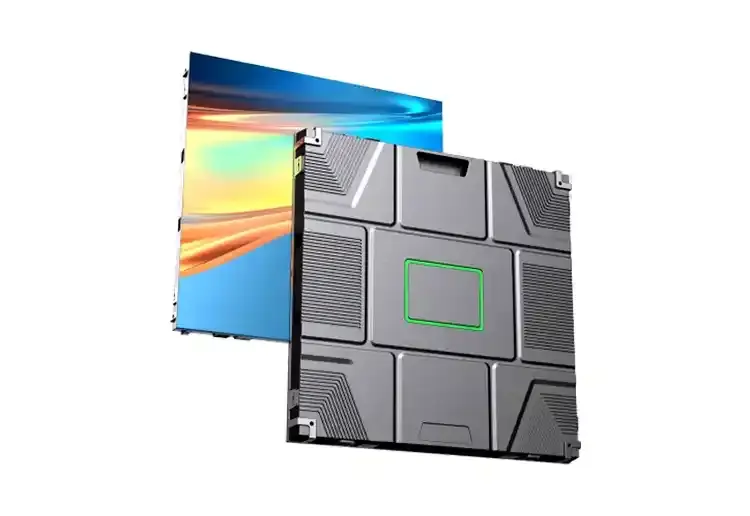 P1.86 Fine Pitch Indoor LED Screen | HD LED Video Wall
P1.86 fine pitch indoor LED screen: 640×480 front-service cabinet, 7680Hz refresh, 6000:1 contrast and seamless HD visua...
-
 Custom LED Video Wall Manufacturer | 2K/4K/8K Indoor Video Wall
Custom LED video wall in 2K/4K/8K with seamless splicing, HDR, high refresh rate & front maintenance. Factory-direct...
-
 P1.5 Ultra-fine pitch indoor led display
P1.5 ultra-fine pitch indoor LED display delivers sharp details, vivid colors, seamless splicing, and stable performance...