

































XR Virtual Production LED Control System Solution
The xR Virtual Production LED Control System Solution is a high-performance display control system purpose-built for Extended Reality (xR) virtual production studios. It precisely synchronizes LED screen refresh timing with camera frame rates, manages color consistency across large-scale multi-panel installations, and enables real-time rendering engines to seamlessly drive physical LED display arrays — making it the critical infrastructure that defines the quality ceiling of modern virtual production.
As a professional LED display manufacturer, REISSOPTO delivers a purpose-designed xR Virtual Production LED Control System Solution that ensures frame-accurate synchronization, professional-grade color management, and unified, reliable control across every panel in the studio.
1. Industry Background: A Paradigm Shift in Film & TV Production
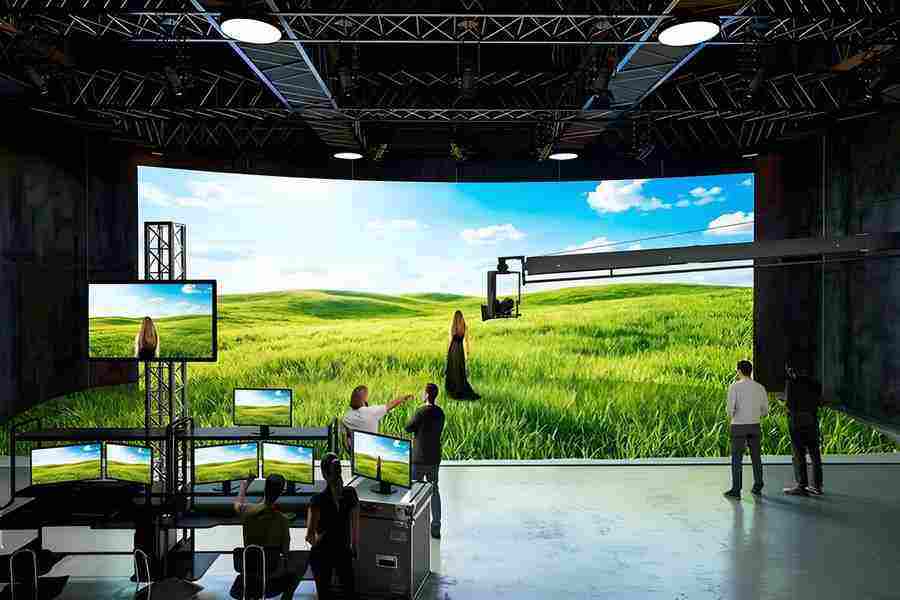
Over the past decade, the global film and television production industry has undergone a profound technological revolution. From the stunning debut of LED virtual production on The Mandalorian to the rapid buildout of virtual studio facilities by leading Chinese production companies, xR virtual production (Extended Reality Virtual Production) has evolved from a niche Hollywood experiment into one of the mainstream workflows in global content creation.
The core logic of xR virtual production is straightforward: replace traditional green screens with high-brightness, high-refresh-rate LED displays, and project digitally rendered virtual environments — generated by real-time rendering engines — directly into the physical studio space. The camera captures a live composite of actors and props against a physically present virtual background, rather than relying on post-production CG compositing. The result is a dramatic improvement in both creative freedom and production efficiency.
"xR virtual production is more than a new technology — it changes the entire collaborative dynamic of the production workflow. Directors, actors, and cinematographers all see the same final image in the same physical space, and decision-making becomes dramatically faster."
— Technical Director, Leading Film Production Company
In the midst of this transformation, the LED display control system serves as the critical bridge between virtual content and physical screen. Its performance directly determines the quality ceiling of every shot captured on set. Frame synchronization accuracy, refresh rate, and color management capability — even marginal differences in these parameters translate into visible image quality gaps in the final deliverable.
2. The Challenge: Pain Points and Objectives
As xR virtual production scales into mainstream adoption, many production teams have discovered that deploying conventional LED control systems in virtual studio environments leads to a range of serious, compounding problems. Below are the core pain points and objectives that any qualified xR Virtual Production LED Control System Solution must address.
Pain Points
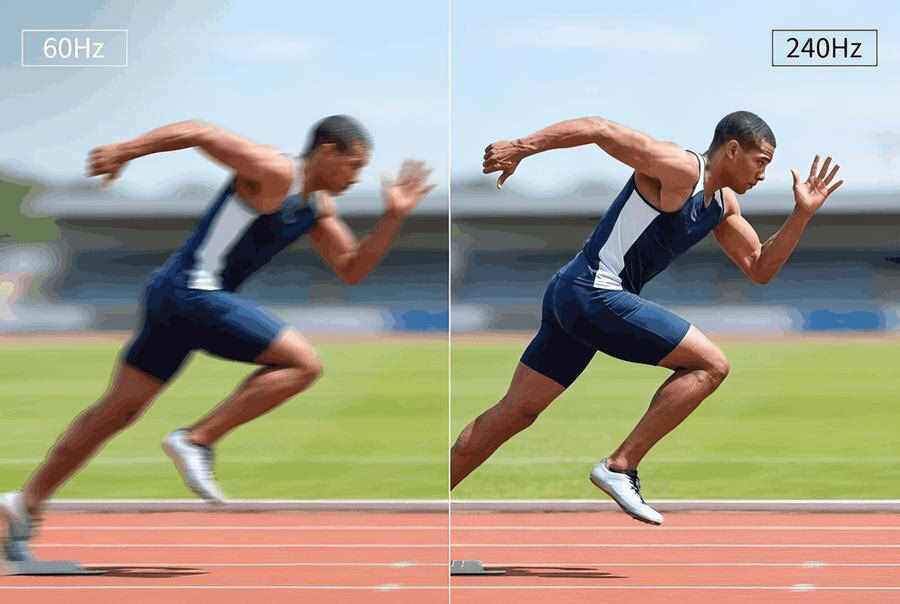
Banding and Moiré Artifacts – When the camera shutter speed is out of sync with the LED screen's refresh cycle, the camera captures regions of the display at different luminance states within a single exposure, producing visible horizontal banding artifacts. This results in large volumes of unusable footage.
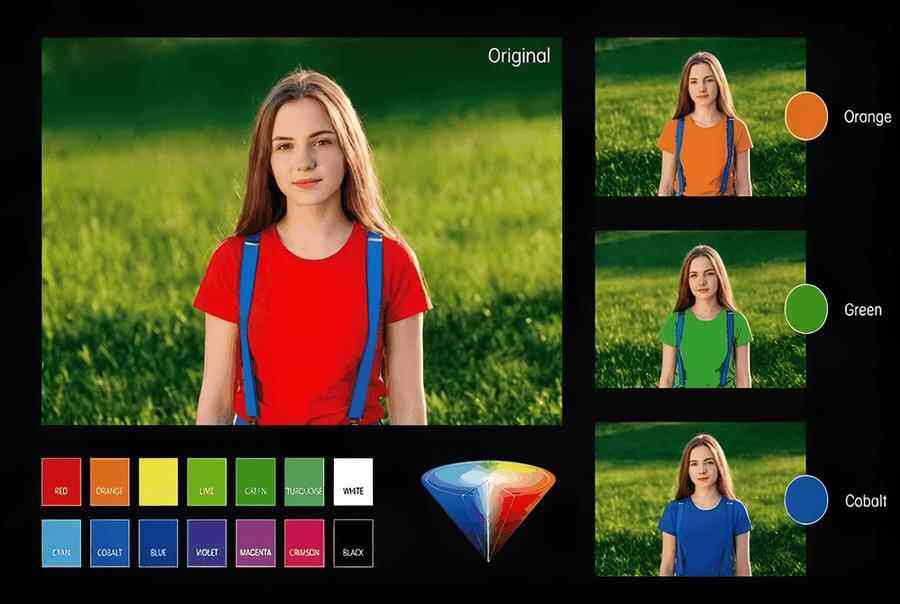
Color Inaccuracy Undermining Realism – Conventional LED control systems lack precise color space mapping aligned to camera color science. Virtual background lighting colors fail to accurately reproduce on actors, costumes, and props — breaking the sense of realism and substantially increasing post-production grading workload.
Difficulty Synchronizing Multi-Panel Installations – A standard xR studio typically comprises a main background wall, an overhead ceiling panel, and two side wing panels. Traditional distributed control approaches cannot guarantee frame-level synchronization across all panels, causing visible luminance flicker discrepancies between screens during camera movement.
High Operational Complexity On Set – Managing each panel through an independent control system raises the technical barrier for operators and increases the risk of misconfiguration during live production.
Excessive Post-Production Costs – Without reliable virtual production infrastructure, teams are forced to rely heavily on post-production CG compositing to compensate for control system deficiencies, inflating budgets and extending delivery timelines.
Objectives
Achieve frame-accurate synchronization between the LED display system and the camera at any shutter angle, eliminating banding entirely.
Support full coverage of mainstream cinema camera color spaces, delivering professional-grade color accuracy (ΔE < 2).
Provide unified multi-panel management, locking background walls, ceiling panels, and wing screens to a single reference clock.
Maintain compatibility with leading real-time rendering engines, including Unreal Engine, Notch, and TouchDesigner.
Deliver a simplified on-set operator interface with remote monitoring capability, reducing technical complexity and minimizing production downtime.
As a manufacturer, our mission is to design and deliver an xR Virtual Production LED Control System Solution that genuinely resolves these challenges — enabling production teams to capture better images at higher quality, faster, and at a fraction of the traditional post-production cost.
3. Solution Overview
Addressing the specific demands of xR virtual production, this solution is built on a high-performance distributed LED control architecture that delivers a complete end-to-end workflow — from signal ingestion and frame synchronization processing to color management and unified multi-panel scheduling — covering every critical stage of the xR production pipeline.
| Solution Layer | Core Hardware / Software | Primary Function |
|---|---|---|
| Content Generation Layer | Unreal Engine / Notch / TouchDesigner | Real-time rendering of virtual environments; high-resolution video signal output |
| Control Processing Layer | xR-dedicated high-performance LED controller | Frame sync lock, HDR color mapping, ultra-high-resolution signal distribution |
| Display Drive Layer | High-refresh-rate LED receiving cards | Drive LED modules to achieve high refresh rate and high-bit-depth grayscale output |
| Tracking Integration Layer | Camera tracking system (third-party) | Real-time position data relay to drive parallax-accurate perspective rendering |
| Management & Monitoring Layer | Visual management software platform | Unified multi-panel status monitoring, remote control, and fault alerting |
The governing design principle is to position the high-performance LED controller as the central hub — interfacing upward with any leading real-time rendering engine, driving all LED panels downward in a unified manner, and integrating horizontally with the camera tracking data pipeline. The result is a tightly integrated, centrally managed xR display control loop.
4. Core Technology: How the Solution Works
The solution is built on three core technologies, each directly addressing one or more of the pain points outlined above.
Frame Synchronization (Genlock)
The high-performance control system accepts an external reference signal via its Genlock input, receiving a reference clock from the camera system or a dedicated sync pulse generator. This locks the entire LED display system's refresh timing to the camera's frame period. The system elevates the LED screen's refresh rate to an integer multiple of the camera frame rate — supporting up to 3,840Hz and beyond — ensuring that at any shutter angle (from 180° down to 11.25°), the LED display completes at least one full refresh cycle within every single camera exposure. This eliminates the root cause of banding artifacts entirely.
In a typical 24fps shoot: the frame period is 41.7ms, while the 3,840Hz LED refresh cycle is only 0.26ms — delivering 160 complete refresh cycles within each single exposure. No banding risk at any shutter angle.
Color Management and HDR Mapping
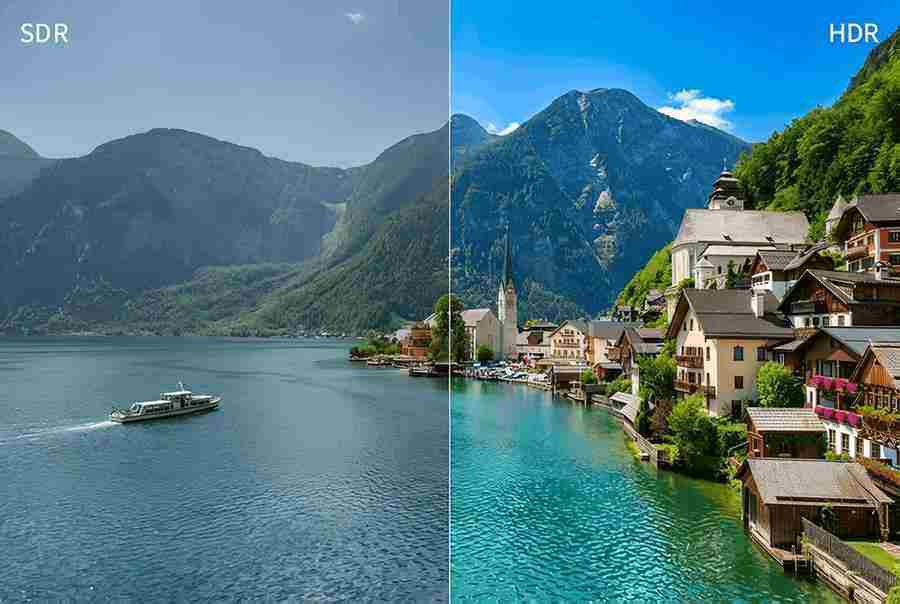
The accuracy of virtual background lighting color directly determines how convincingly that light falls on actors' faces, costumes, and props. The solution integrates a professional-grade color management module with precise color space conversion support for BT.2020, DCI-P3, and sRGB, along with per-camera LUT calibration tailored to each camera's individual color response characteristics. This ensures the LED background colors captured by the camera precisely match the creative intent of the rendering engine.
Combined with per-pixel luminance and color uniformity correction technology, the solution maintains color uniformity across the entire LED wall within ΔE < 2 — a professional-grade standard — effectively eliminating the color blocking and hot spots caused by unit-to-unit variation between LED modules, and providing a consistent, reliable background environment for high-fidelity virtual production.
Distributed Multi-Panel Unified Control
A standard xR studio typically includes a main background wall (15–25m wide, 5–8m tall), an overhead ceiling panel covering the primary shooting area, and left and right wing screens (each 3–5m wide) — often totaling tens of millions of pixels or more.
The distributed control architecture supports cascaded multi-controller synchronization, with all controllers sharing a single reference clock to achieve frame-accurate synchronized refresh across every panel simultaneously. Through the unified visual management software platform, the entire multi-panel system can be controlled from a single interface for brightness adjustment, fault monitoring, and content distribution — dramatically lowering the technical barrier for on-set operators.
5. Case Studies
Case Study 1: xR Virtual Production Studio, Major Film Production Company
Project Configuration
| Main Background Wall | 22m wide × 7m tall, curved configuration |
| Ceiling Panel | Covering a 15m × 10m shooting area |
| Controller Configuration | 4× high-performance xR controllers in cascade |
| LED Pixel Pitch | P2.6 broadcast-grade modules |
Results: Following commissioning, the production team reported complete elimination of banding artifacts. Average effective shooting sessions per day increased from 8 (under the previous green screen workflow) to 14. Post-production turnaround time per episode was reduced by approximately 45%.
Case Study 2: LED Virtual Studio Upgrade, Major Satellite Broadcaster
Project Configuration
| Main Background Wall | 18m wide × 5m tall, curved LED |
| Wing Screens | 4m wide each, seamlessly joined to main wall |
| Control Solution | Distributed high-performance xR control system |
| Frame Synchronization | Interfaced with studio Tri-Level Sync |
Results: The upgraded facility successfully hosted several landmark variety show productions. The production team reported a dramatic improvement in virtual scene switching efficiency — set changeover time per episode dropped from 3 days to just 4 hours.
Case Study 3: International Brand Commercial Production Base
Project Configuration
| Main Background Wall | 14m wide × 4.5m tall, flat LED |
| Ceiling Panel | 8m × 6m fill-light overhead screen |
| Control Solution | Dual-redundant hot-standby xR controllers |
| LED Pixel Pitch | P1.9 commercial-grade high-definition modules |
Results: Since opening, the facility has enabled clients to complete 6 distinct scene styles for the same product within a single shooting day. Overall production cycles are 70% shorter than traditional on-location shoots, with travel and venue costs reduced to near zero.
6. Measured Outcomes
Based on real-world feedback data from multiple commissioned projects, the xR Virtual Production LED Control System Solution delivers quantifiable value across the following dimensions:
Banding artifact rate reduced to zero, verified across all tested camera and shutter parameter combinations.
Color accuracy maintained at ΔE < 2, with full support for high-speed shooting at 1,000fps and above.
Average effective shooting sessions per day increased by 50–80%, with virtual scene switching time compressed from hours to minutes.
Post-production CG compositing costs reduced by approximately 60%, with physical set construction costs effectively eliminated.
Directors preview the final image in real time on set, enabling all key creatives to make decisions together in the same physical space.
As a manufacturer, our mission is to design and deliver an xR Virtual Production LED Control System Solution that truly resolves the industry's most critical pain points — giving every production team, from major studios to independent creators, the technical foundation they need to tell better stories, faster, and at substantially lower cost.
7. Summary and Outlook
xR virtual production represents more than a new technical pathway — it reflects the inevitable shift of the entire film, advertising, and entertainment production industry toward digital, real-time workflows. As real-time rendering engine performance continues to advance and LED technology pushes further boundaries in pixel pitch, brightness, and color gamut, virtual production will rapidly expand beyond top-tier studios to reach mid-sized and independent production teams.
Throughout this evolution, the LED display control system will continue to play the role of core production infrastructure. Future development will focus on lower-latency tracking integration protocol support, AI-driven adaptive color calibration, and deep co-validation programs with leading LED module manufacturers — all in service of delivering xR solutions that are increasingly reliable, easier to deploy, and more accessible than ever before.