Table of Contents
Hot Recommendations
Get a Free Quote Instantly!
Talk to Our Sales Team Now.
In modern live production, visual impact is no longer an optional enhancement. It is often the center of the entire event experience. Whether it is a concert tour, corporate product launch, music festival, sports ceremony, exhibition booth, worship service, or televised award show, the stage LED screen has become one of the most powerful tools for shaping atmosphere, delivering information, and connecting audiences with the performance.
Rental stage LED screens have developed rapidly in recent years. They are no longer simple large video walls used only for background images. Today’s professional rental LED display systems combine ultra-high-definition image quality, high refresh rates, HDR processing, lightweight cabinet design, fast-lock installation, flexible creative shapes, interactive control, broadcast-friendly performance, and intelligent monitoring.
For event organizers and production teams, this means a rental LED screen can do much more than show video. It can become a dynamic stage environment, a storytelling surface, a brand communication platform, and a reliable technical system that supports the entire show.
This article explores the latest technological advancements in rental stage LED screens and explains how these innovations help create unforgettable events with better image quality, safer installation, faster setup, and more stable live performance.
One of the most important developments in rental stage LED display technology is the move toward finer pixel pitch and higher resolution. In the past, large stage LED screens were mainly viewed from a long distance, so coarse pixel pitches were acceptable. Today, many events combine large main screens with closer audience seating, livestream cameras, VIP areas, exhibition zones, and hybrid event broadcasting.
This has increased the demand for fine-pitch rental LED screens such as P1.9, P2.6, P2.9, and P3.9, depending on viewing distance and application.
A finer pixel pitch provides:
Sharper text and logos.
More detailed product visuals.
Smoother facial close-ups.
Better performance for corporate presentations.
Cleaner camera shots for livestreaming.
A more premium visual experience for front-row audiences.
For example, a corporate product launch may use a P2.6 indoor rental LED wall to display product renderings, brand videos, and speaker backgrounds with high clarity. A concert stage may choose P3.9 or P4.8 to balance resolution, screen size, viewing distance, and rental cost.
The key is not always choosing the smallest pixel pitch. A professional stage LED solution should match pixel pitch with viewing distance, content type, screen size, camera requirements, and budget. This makes the display sharp enough for the audience without creating unnecessary system cost.
Modern audiences are used to vivid screens from smartphones, televisions, cinemas, and digital advertising displays. As a result, event LED screens must deliver stronger color depth, better contrast, and more natural brightness control than before.
HDR-capable rental stage LED screens help improve the visual experience by creating deeper blacks, brighter highlights, smoother gradients, and more realistic color transitions. This is especially valuable for concerts, fashion shows, product launches, immersive exhibitions, and broadcast events.
Advanced LED display systems now support:
Higher grayscale performance.
Wider color gamut.
More accurate color temperature adjustment.
Better low-brightness detail.
Smoother gradient transitions.
More natural skin tones on camera.
Stronger contrast under stage lighting.
For live productions, low-brightness performance is very important. Many stage scenes use dark backgrounds, smoke, moving lights, and dramatic shadows. If the LED screen cannot maintain grayscale quality at lower brightness, the image may look crushed, noisy, or uneven.
A professional rental LED display should allow technicians to adjust brightness, gamma, color temperature, and contrast according to the lighting design and camera environment. This ensures the screen looks impressive to the audience while remaining comfortable and balanced on camera.
A rental stage LED screen may look perfect to the human eye but still flicker on camera if the refresh rate is not high enough. This is a major concern for livestreamed concerts, TV broadcasts, conferences, esports events, religious services, award ceremonies, and hybrid events.
High-refresh LED screens, often 3,840Hz or above, help reduce flicker, scan lines, and image tearing when filmed by professional cameras. Some advanced systems provide even higher refresh configurations for demanding broadcast environments.
Benefits of high refresh rate include:
Cleaner camera recording.
Reduced flicker in livestreams.
Better compatibility with broadcast cameras.
Smoother motion for fast video content.
More professional results for IMAG screens.
Improved performance for esports and real-time visual effects.
However, refresh rate is only one part of the solution. Camera shutter speed, frame rate, LED brightness, processor settings, and content format must also be coordinated. For professional events, the LED technician should work with the camera director and video engineer during rehearsal to test flicker, moiré, exposure, and color balance.
This technical coordination is one of the reasons why experienced LED suppliers are valuable. They do not only provide screens; they help ensure the entire visual system works correctly in a real production environment.
Rental LED screens must be installed, dismantled, transported, and reused frequently. Because of this, cabinet design has become one of the most important areas of technological improvement.
Modern rental stage LED cabinets are usually made from die-cast aluminum or lightweight magnesium alloy. They are designed to be thinner, stronger, easier to align, and faster to lock together.
Advanced rental cabinet features include:
Lightweight structure for easier handling.
Fast-lock systems for quick assembly.
Positioning pins for accurate alignment.
Magnetic modules for fast maintenance.
Front and rear service options.
Curved locking options for creative stages.
Stronger corner protection for touring use.
Better heat dissipation design.
Integrated cable management.
These improvements save time during event setup. In many venues, the installation window is limited. Crews may have only a few hours to build the LED wall, complete signal mapping, test content, adjust color, and prepare for rehearsal.
A well-designed rental LED cabinet improves both speed and safety. It reduces labor pressure, minimizes alignment errors, and makes maintenance easier when a module or power supply needs replacement before showtime.
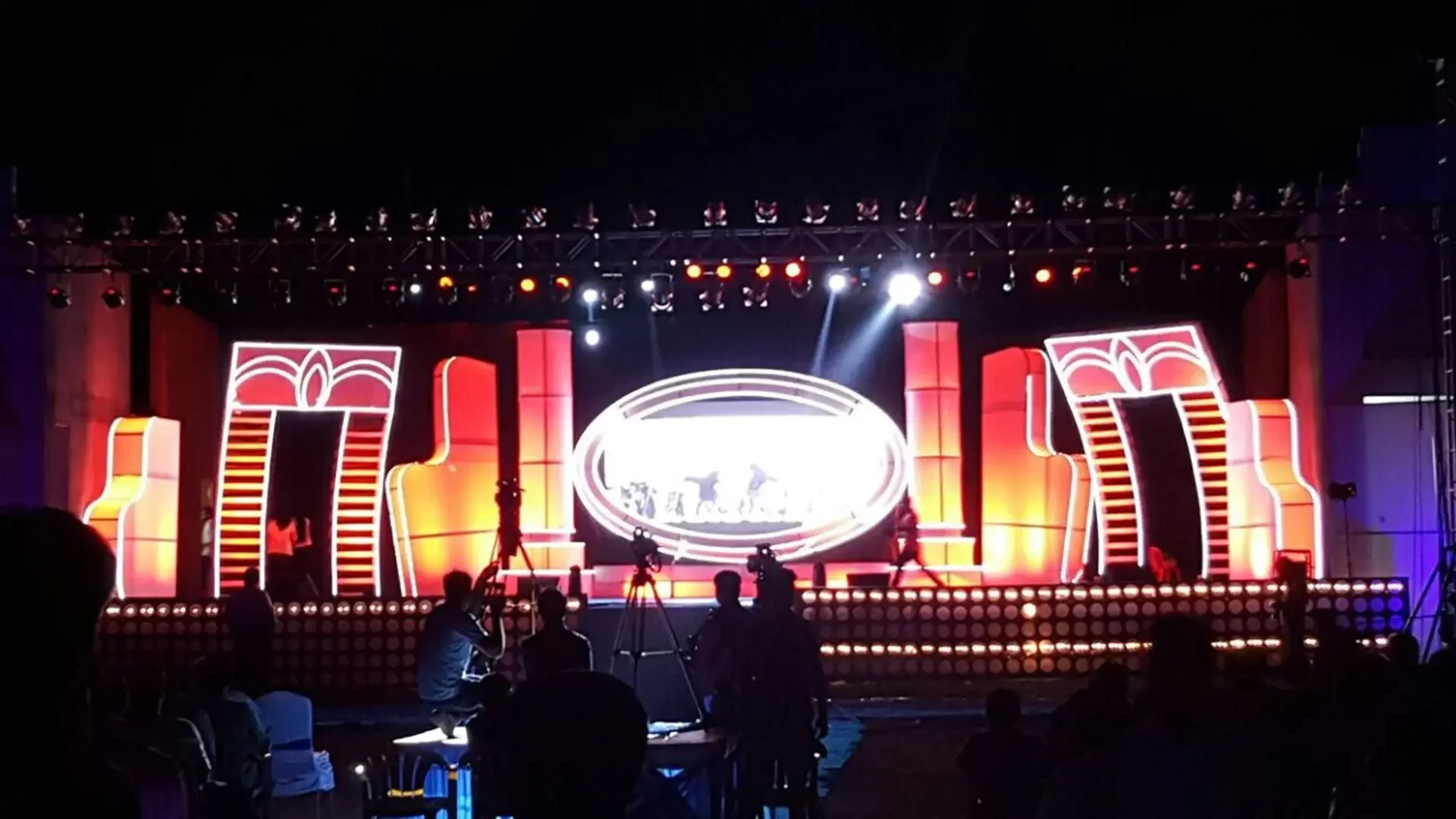
Stage design is becoming more creative, and rental LED screens are no longer limited to flat rectangular walls. With improved cabinet mechanics and flexible LED technology, production teams can now build immersive stage environments with curved, angled, hanging, stacked, transparent, floor, and irregular LED configurations.
Popular creative applications include:
Curved LED backdrops.
Side LED wings.
LED tunnels.
LED ceilings.
LED floors and runways.
Cube-shaped LED structures.
Circular or arc-shaped LED walls.
Transparent LED screens for layered stage effects.
Column LED displays for exhibitions and concerts.
Irregular LED layouts for immersive storytelling.
Flexible rental LED solutions allow stage designers to match the screen with the theme of the event instead of forcing the design around a standard display shape.
For concerts, creative LED structures can follow the rhythm of the performance and become part of the lighting design. For corporate events, unique LED forms can strengthen brand identity and make the stage more memorable. For exhibitions, curved or transparent LED screens can attract visitors from different angles and create a high-tech booth environment.
The most important point is that creative design must still be supported by professional engineering. Every non-standard LED installation requires accurate pixel mapping, power planning, structural safety checks, and content design based on the actual display layout.
Another major advancement is the integration of interactive technology. Rental stage LED screens are now used not only for one-way display but also for real-time audience participation.
Interactive event LED systems can connect with:
Mobile voting platforms.
QR code participation.
Social media walls.
Live comment displays.
Motion tracking.
Touch sensors.
LED floor interaction.
AR and XR content.
Real-time data visualization.
Game-based audience engagement.
For example, a brand launch can invite attendees to scan a QR code and vote for product features, with results appearing instantly on the LED screen. A concert can show fan messages or live social media content. An exhibition booth can use an interactive LED floor to respond to visitor movement. An esports event can display real-time statistics and audience reactions.
This technology changes the LED screen from a passive background into an active communication platform. It helps audiences feel involved, which is especially important for younger digital-native viewers who expect live events to be shareable, responsive, and immersive.
For reliable operation, interactive LED systems require stable network planning, content moderation, backup control, and careful latency management. The LED display is only one part of the interactive solution; software, media servers, sensors, and event control systems must work together.
Rental stage LED screens are increasingly used in XR and virtual production environments. Instead of relying only on green screens, production teams can use LED walls to create realistic digital backgrounds that respond to camera movement.
This technology is valuable for:
Virtual concerts.
Hybrid conferences.
Film and commercial production.
Product launches.
Immersive exhibitions.
Online brand events.
Broadcast studios.
Live-streamed performances.
In XR production, the LED screen must meet higher technical standards than a normal event display. It may require high refresh rate, low scan behavior, accurate color reproduction, low latency, high contrast, and precise synchronization between the LED processor, camera tracking system, media server, and rendering engine.
Professional XR LED setups often need:
Camera-friendly refresh performance.
Accurate calibration.
Genlock or synchronization support.
Low-latency processing.
Stable frame timing.
Wide viewing angle.
Moiré control.
Matching color between physical lighting and virtual content.
When properly configured, XR LED stages allow performers to see and react to the digital environment in real time. This creates more natural performances and reduces post-production work. For events, XR can turn a limited venue into a virtual city, futuristic showroom, digital landscape, or branded world.
As rental LED systems become larger and more complex, intelligent monitoring has become essential. In the past, technicians often had to discover problems visually after they appeared on the screen. Today, advanced LED control systems can monitor key operating conditions in real time.
Smart monitoring can track:
Cabinet temperature.
Power supply status.
Voltage and current.
Signal connection status.
Receiving card condition.
Brightness settings.
Operating hours.
Module errors.
Fan or cooling status.
Communication failures.
This allows technicians to detect potential problems before they become visible to the audience. For example, if a cabinet temperature rises abnormally, the technician can check ventilation or reduce brightness before the module fails. If a signal cable becomes unstable, the system may show which section is affected.
Remote control is also important for multi-location events, touring productions, and permanent rental-style installations. Technicians can adjust brightness, upload configuration files, check screen health, and support local teams from another location.
For high-value events, intelligent monitoring improves confidence. It turns LED screen operation from reactive troubleshooting into proactive management.
Reliability is one of the most important requirements for rental stage LED screens. A screen failure during a live show can affect the entire event experience. For concerts, award ceremonies, corporate presentations, and broadcast productions, downtime must be avoided as much as possible.
Modern professional LED systems increasingly use redundancy design to improve stability.
Common redundancy solutions include:
Dual signal input.
Backup LED processor.
Loop signal backup between cabinets.
Dual power input.
Power supply redundancy.
UPS backup for processors and control computers.
Backup media server output.
Fiber transmission backup for long-distance signal runs.
Signal redundancy means that if one signal path fails, the screen can continue receiving data through another path. Power redundancy helps reduce the risk of black sections caused by power failure. Backup processors and configuration files allow technicians to recover quickly if control hardware fails.
For major events, redundancy should be planned from the beginning, not added at the last minute. The system diagram should clearly show main and backup routes, and the team should test switching during rehearsal.
Outdoor rental stage LED screens must operate in sunlight, rain, humidity, dust, heat, cold, and wind. Because more concerts, festivals, fan zones, ceremonies, and public events are held outdoors, weather-resistant LED technology has become increasingly important.
Advanced outdoor rental LED screens now feature:
IP-rated waterproof modules.
Sealed power and signal connectors.
Anti-corrosion cabinet coating.
High-brightness LED lamps.
Improved heat dissipation channels.
UV-resistant masks.
Stronger cabinet frames.
Drainage-friendly design.
Temperature monitoring.
Wind-load compatible installation structures.
Brightness is especially important outdoors. The screen must remain visible under daylight while avoiding excessive power consumption and heat. Intelligent brightness adjustment helps balance visibility, energy use, and LED lifetime.
Thermal management is another key factor. High temperature can reduce LED performance, cause color drift, and shorten component life. Professional outdoor rental screens use cabinet ventilation, heat-dissipation materials, efficient power supplies, and smart monitoring to maintain stable operation.
After outdoor events, proper drying and inspection are also important. Panels should not be packed wet into sealed flight cases, because trapped moisture can damage modules, connectors, and power components during storage.
Fast maintenance is essential in rental applications. Event schedules are tight, and a single faulty module must be replaced quickly without dismantling the entire screen.
Modern rental LED screens increasingly support both front and rear maintenance. Magnetic LED modules, quick-release power boxes, accessible receiving cards, and modular cabinet design make service easier.
Front maintenance is useful when:
The screen is installed against a wall.
Rear access is limited.
The display is used in a conference room or exhibition booth.
The LED wall is part of a narrow stage design.
Rear maintenance is useful when:
The screen is flown or ground-stacked with technician access behind it.
The crew needs faster access to power and receiving cards.
Large touring systems require frequent servicing.
A professional rental LED screen solution should consider maintenance access before installation. If the screen is beautiful but impossible to service quickly, it creates risk for live production.
Energy efficiency is becoming more important for event organizers, venues, and rental companies. Large LED walls can consume significant power, especially during outdoor events or high-brightness scenes. New LED display technologies are improving efficiency without sacrificing visual performance.
Energy-saving advancements include:
More efficient LED chips.
Common cathode power design.
Intelligent brightness adjustment.
Low-power driver ICs.
Better heat dissipation.
Lightweight cabinets that reduce transport load.
Modular repair instead of full-panel replacement.
Longer component lifespan.
For rental companies, energy efficiency is not only about environmental responsibility. It also reduces power distribution pressure, lowers generator requirements, decreases heat output, and improves long-term operating cost.
For event organizers, sustainable LED screen solutions can support greener event planning while still delivering strong visual impact.
Technology alone does not guarantee a successful event. Even the most advanced rental LED screen needs a professional workflow to deliver reliable results.
A complete rental stage LED solution should include:
Confirm event type, venue, screen size, and viewing distance.
Select suitable pixel pitch and brightness.
Prepare structural drawings and installation method.
Calculate power consumption and safety margin.
Design signal routing and backup plan.
Provide exact screen resolution to the content team.
Test cabinets, modules, processors, cables, and spare parts.
Prepare calibration files and configuration backups.
Check truss, ground support, or hanging structure.
Build cabinets according to the screen layout.
Confirm screen flatness and cabinet alignment.
Connect power by zones.
Route signal cables cleanly.
Upload correct receiving card parameters.
Run grayscale, color, and full-white tests.
Adjust brightness and color temperature.
Test backup signal and power routes.
Save final configuration.
Monitor screen temperature and signal status.
Keep a technician on standby.
Communicate with lighting, video, and stage teams.
Avoid unnecessary setting changes during the show.
Watch camera performance and exposure.
Prepare quick switching for backup input.
Power down correctly.
Inspect modules, locks, cables, and cabinets.
Dry outdoor panels before packing.
Record damaged parts.
Update maintenance logs.
Store cabinets by batch and calibration group.
This workflow is what turns advanced LED technology into stable event performance.
The latest rental stage LED technologies bring value to every part of the event process.
For audiences, they create brighter, sharper, and more immersive visual experiences. For performers, they provide a stronger stage atmosphere and real-time visual support. For brands, they offer a powerful storytelling platform. For production teams, they improve reliability, installation speed, control flexibility, and maintenance efficiency.
The biggest benefits include:
More immersive event design.
Better visual quality for close viewing.
Professional camera-friendly performance.
Faster setup and dismantling.
Safer and lighter installation.
More creative stage shapes.
Stronger outdoor reliability.
Easier maintenance.
Better interactive engagement.
Reduced event operation risk.
A modern rental LED screen is no longer just a display product. It is a complete visual production system.
The latest rental stage LED screen technologies include fine-pitch LED panels, HDR image processing, high refresh rates, lightweight die-cast cabinets, curved and flexible LED structures, interactive content systems, XR integration, intelligent monitoring, and redundant power and signal design.
High refresh rate helps reduce flicker, scan lines, and image tearing when the LED screen is filmed by professional cameras. It is especially important for livestreams, TV broadcasts, esports events, conferences, and hybrid productions.
Modern rental LED screens can be built into curved walls, side wings, LED floors, ceilings, tunnels, columns, and irregular shapes. These flexible configurations allow designers to create immersive stage environments instead of using only flat rectangular displays.
Outdoor rental LED screens need high brightness, waterproof protection, sealed connectors, strong cabinet structure, heat dissipation, wind-load planning, and reliable power distribution. These features help the screen operate safely in sunlight, rain, dust, and changing weather.
Stable performance depends on correct product selection, power calculation, signal routing, calibration, backup equipment, spare parts, structural safety checks, content testing, and experienced on-site technical support.

P2.976 rental LED screen for indoor and outdoor stages: high refresh rate, vivid colors, fast-lock setup, seamless splic...
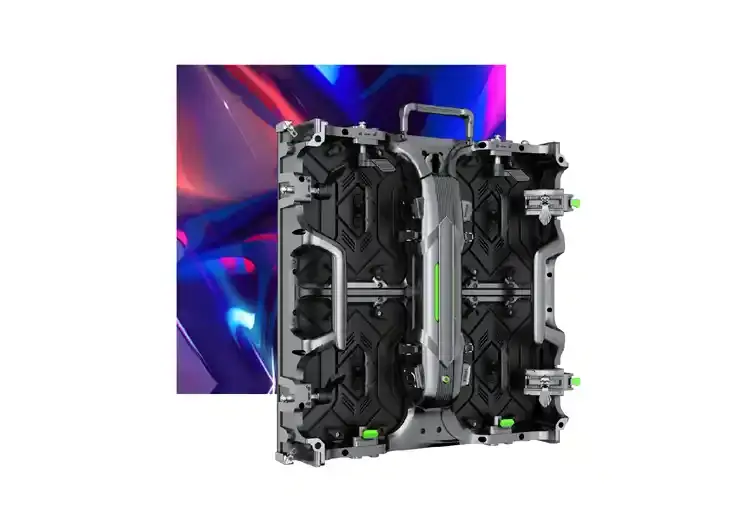
P2.604 rental LED screen for stage: 500×500mm die-cast cabinet, 7680Hz refresh, IP65, curved splicing, front/rear servic...
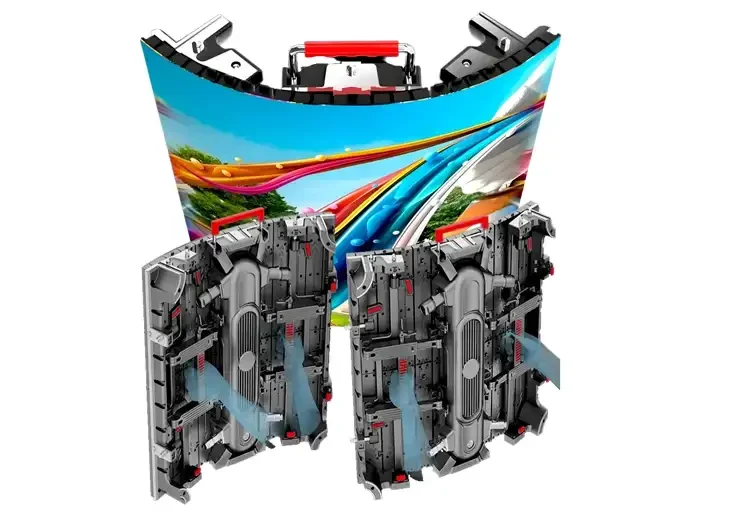
P1.953 LED Display for Rental with 262,144 dots/m² and 3840–7680Hz refresh. Lightweight die-cast cabinet, fast lock, ide...


If you are interested in our products, please contact us promptly
Reach out to our sales team to explore customized solutions that perfectly meet your business needs and address any questions you may have.
Email Address:info@reissopto.comFactory Address:Building 6, Huike Flat Panel Display Industrial Park, No. 1, Gongye 2nd Road, Shiyan Shilong Community, Bao'an District, Shenzhen city , China
whatsapp:15217757270