



































Outdoor Large Advertising LED Screen Project for a Football Stadium
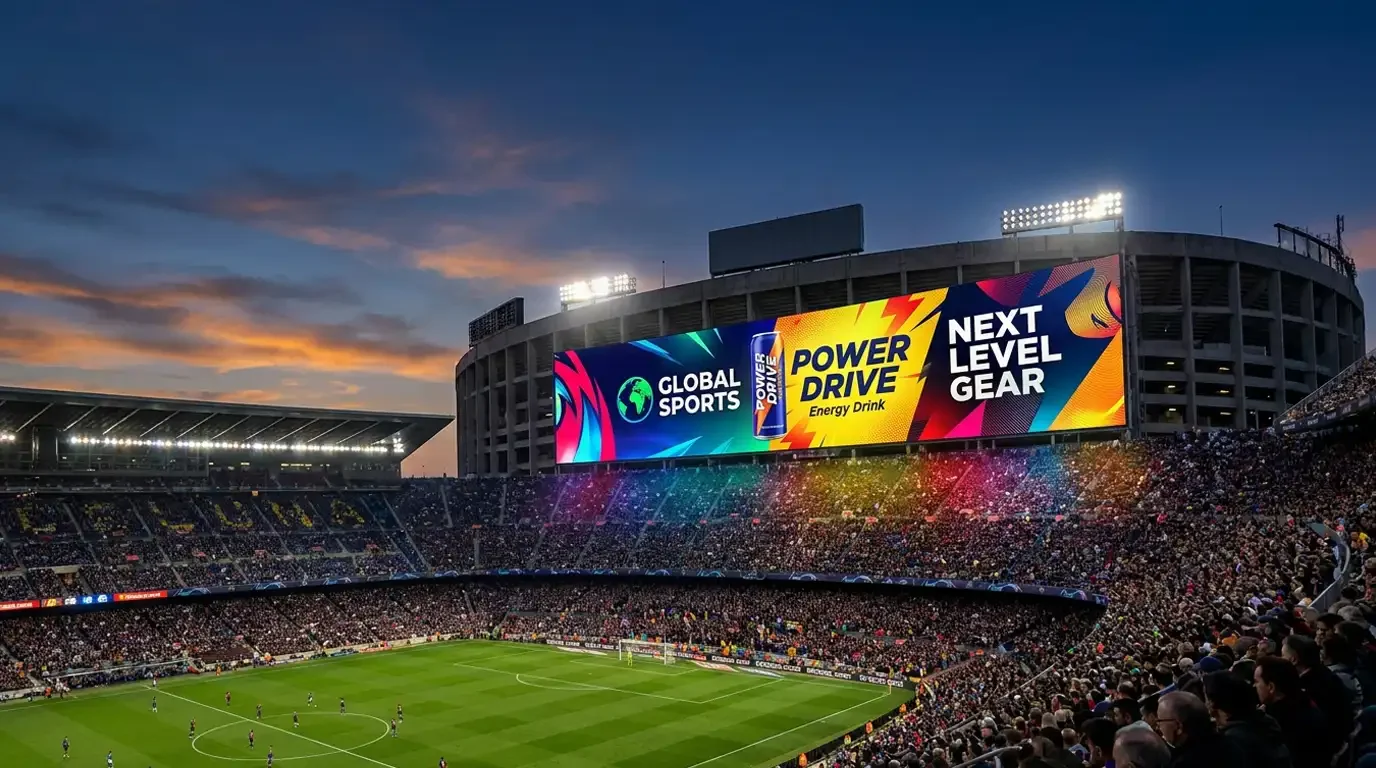
Outdoor Large Advertising LED Screen Project for a Football Stadium in Barcelona, Spain
Barcelona is a city where football is more than a sport. It is part of the local culture, city identity, and live entertainment experience. For football stadiums, the matchday atmosphere is created not only by the game itself, but also by the visual communication around the venue — team branding, sponsor advertisements, match information, fan interaction, safety reminders, and real-time promotional content.
In this project case, an outdoor large advertising LED screen was installed for a football stadium in Barcelona, Spain. The purpose of the project was to provide a high-brightness, weather-resistant, and reliable LED display solution that could deliver clear advertising content and event information in an outdoor stadium environment.
Unlike indoor commercial displays, outdoor football stadium LED screens face more demanding conditions. They must remain visible under strong daylight, operate safely in changing weather, support long viewing distances, and maintain stable performance during high-traffic matchdays. Therefore, the solution required professional LED display technology, careful structural planning, reliable power and signal design, and practical maintenance consideration.
Project Overview
The Barcelona football stadium required a large-format LED advertising display for outdoor use. The screen needed to support sponsor advertisements, club-related content, matchday promotions, event notices, and high-impact brand visuals.
The main requirements of the project included:
Clear visibility in outdoor daylight.
Stable operation during football matches and events.
High brightness suitable for stadium environments.
Wide viewing angle for different seating areas.
Weather-resistant cabinet and module design.
Strong structural safety for outdoor installation.
Reliable signal and power distribution.
Easy maintenance for long-term operation.
Flexible content management for advertising updates.
Because stadium advertising is usually viewed from medium to long distances, the screen did not need an extremely fine pixel pitch like an indoor conference LED wall. Instead, the key priorities were brightness, stability, viewing distance, waterproof performance, and overall visual impact.
Understanding the Stadium Application Environment
A football stadium is a complex display environment. The screen is exposed to sunlight, rain, humidity, wind, dust, and temperature changes. At the same time, the display must perform well when surrounded by strong stadium lighting, camera shooting, large crowds, and fast-changing advertising content.
For this Barcelona stadium LED display project, several environmental factors were considered before finalizing the solution.
1. Outdoor Brightness Conditions
Outdoor LED screens must be bright enough to remain readable during daytime matches and events. If the brightness is too low, advertisements will look faded under sunlight. If the brightness is too high during evening events, the screen may cause glare and visual discomfort.
Therefore, a professional outdoor LED screen should support adjustable brightness. During the day, the screen can operate at higher brightness. At night, brightness can be reduced to protect audience comfort while maintaining excellent image clarity.
2. Viewing Distance and Pixel Pitch
Football stadium audiences view screens from different positions. Some viewers may be close to the display, while others may be seated far away. The selected pixel pitch must balance clarity, screen size, and project cost.
For large outdoor stadium advertising LED screens, common choices include P5, P6.67, P8, or P10, depending on actual viewing distance and installation position. A smaller pitch provides higher image detail, while a larger pitch is more cost-effective for long-distance viewing.
The final solution should be based on the stadium layout, audience seating distance, advertising content type, and required resolution.
3. Weather Resistance
Outdoor stadium LED screens must be designed to handle rain and humidity. Waterproof modules, sealed power boxes, outdoor-rated connectors, and proper cabinet drainage are essential.
In a coastal and Mediterranean climate such as Barcelona, moisture, heat, sunlight, and air exposure should be considered. The LED display structure should provide protection against water ingress and long-term outdoor corrosion.
4. Structural Safety
A large LED screen installed in a stadium must be supported by a safe steel structure. Wind load, installation height, screen weight, maintenance access, and local engineering requirements must all be reviewed.
For outdoor stadium applications, structural safety is as important as display performance. A professional LED screen supplier should provide cabinet weight data, installation drawings, power layout, and technical support to assist the engineering team.
LED Screen Solution for the Barcelona Football Stadium
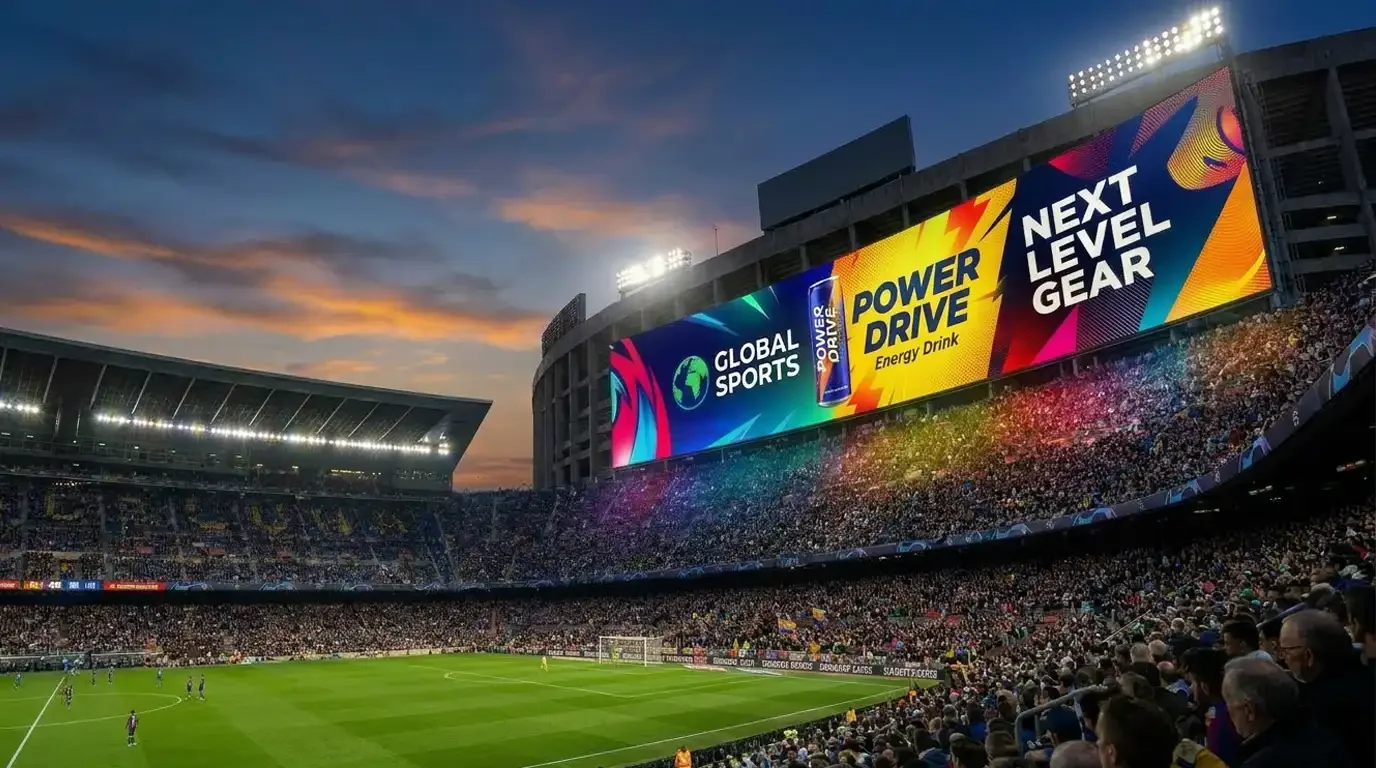
For this project, the solution focused on building a durable and high-impact outdoor advertising LED display suitable for professional football stadium use.
The recommended configuration included:
Outdoor high-brightness LED modules.
Weatherproof LED cabinet design.
High refresh rate for smooth video playback.
Wide viewing angle for stadium audiences.
Automatic brightness adjustment.
Front or rear maintenance depending on installation space.
Stable power distribution system.
Reliable LED video processor and control system.
Steel structure designed for outdoor safety.
Remote content management for advertising updates.
This type of solution allows the stadium operator to display sponsor videos, commercial advertisements, club announcements, live event messages, and promotional campaigns with strong visual impact.
High Brightness for Daytime Visibility
Brightness is one of the most important performance indicators for outdoor stadium LED advertising screens. The display must remain clear even when exposed to daylight.
For outdoor applications, LED brightness is usually much higher than indoor screens. A stadium screen may require approximately 5,000 to 7,000 nits or more, depending on screen orientation, sunlight exposure, and local environment.
However, high brightness alone is not enough. The display also needs good contrast, grayscale performance, and color consistency. If the screen is bright but the image quality is poor, advertisements will not look professional.
For the Barcelona football stadium project, adjustable brightness helped improve the user experience. During sunny daytime events, the screen could deliver strong visual output. During evening matches, brightness could be lowered to avoid excessive glare while keeping the content sharp and attractive.
Weatherproof Design for Outdoor Stadium Operation
Outdoor LED displays must operate reliably in changing weather. A football stadium screen may be exposed to rain, humidity, dust, wind, and temperature changes throughout the year.
The outdoor LED screen solution used weather-resistant modules and cabinets to protect key components. Proper sealing around LED modules, power supplies, receiving cards, and connectors reduces the risk of water damage.
Important weatherproof design features include:
Waterproof LED modules.
Outdoor-rated cabinet structure.
Sealed power and signal connectors.
Anti-corrosion surface treatment.
Proper drainage design.
UV-resistant mask and materials.
Stable operation under temperature changes.
For long-term operation, maintenance teams should also inspect waterproof rings, connectors, cabinet locks, and cable entry points regularly. Outdoor protection is not only about product design, but also about correct installation and routine maintenance.
Wide Viewing Angle for Stadium Audiences
In a football stadium, audiences are spread across different seating areas. Some viewers watch the screen from the front, while others view it from the side. Therefore, the LED display must provide a wide viewing angle and consistent image quality.
A wide viewing angle helps ensure that advertising content remains visible from multiple positions. This is important for sponsor exposure and audience communication.
Color consistency across the screen is also essential. If the LED modules have uneven brightness or color differences, the advertisement may appear unprofessional, especially on large solid-color brand backgrounds.
To solve this, professional LED screens use high-quality LED lamps, calibrated modules, and stable control systems. Regular calibration can help maintain uniform brightness and color performance over time.
High Refresh Rate for Smooth Video Advertising
Stadium advertising content often includes motion graphics, sponsor videos, animated logos, countdowns, and promotional clips. A high refresh rate helps the content appear smoother to the audience and more stable when captured by cameras.
For football stadiums, high refresh performance is especially useful when the screen appears in broadcast footage, social media videos, or fan recordings. A low refresh LED screen may show flickering or scanning lines on camera.
A professional outdoor advertising LED screen should support a high refresh rate, stable grayscale, and smooth video playback. This ensures the content looks clear both on-site and in recorded media.
Reliable Power and Signal Distribution
Large outdoor LED screens require careful power and signal planning. If power distribution is uneven or overloaded, it may cause instability, brightness problems, or system failure.
For this stadium LED screen project, the power system needed to support stable operation during matchdays and other events. The power load was divided into zones to improve safety and serviceability.
Key power and signal considerations included:
Independent power distribution zones.
Proper cable size and protection.
Grounding and surge protection.
Stable LED receiving card layout.
Backup signal planning when necessary.
Weatherproof cable routing.
Easy access for inspection and maintenance.
In professional stadium projects, reliability is more important than simply turning on the screen. The system must be designed to run continuously during important events without unexpected interruption.
Content Management for Advertising and Event Information
A stadium advertising LED screen is valuable because it allows flexible content updates. Compared with static banners, LED screens can display multiple sponsors, time-based advertising, event information, emergency messages, and interactive content.
For this Barcelona football stadium project, the content management system allowed operators to update advertising materials according to the event schedule.
Typical content includes:
Sponsor advertisements.
Club branding videos.
Matchday promotions.
Ticketing information.
Food and beverage promotions.
Safety instructions.
Countdown content.
Fan engagement messages.
Event announcements.
A good content management workflow should be simple, stable, and secure. Operators should be able to schedule content in advance, switch materials quickly, and avoid incorrect playback during live events.
Maintenance Design for Long-Term Use
Maintenance is a critical part of any outdoor stadium LED display project. Even high-quality LED screens need regular inspection because they operate in demanding environments.
Depending on the installation position, the screen can be designed for front maintenance or rear maintenance.
Front Maintenance
Front maintenance is useful when there is limited space behind the screen. Technicians can replace LED modules from the front without dismantling the structure.
Rear Maintenance
Rear maintenance is suitable when there is enough service space behind the display. It allows easier access to power supplies, receiving cards, and cables.
For stadium applications, the maintenance method should be confirmed before installation. The project should provide safe access paths, enough working space, spare modules, spare power supplies, receiving cards, and necessary tools.
Regular maintenance should include:
Cleaning the screen surface.
Checking waterproof seals.
Inspecting power and signal cables.
Testing modules and receiving cards.
Checking cabinet locks and structure.
Monitoring brightness and color consistency.
Updating control system settings when required.
A professional maintenance plan can extend the service life of the LED screen and reduce unexpected downtime.
Why Professional LED Display Solutions Matter
A football stadium LED advertising screen is not just a commercial display. It is part of the stadium’s communication system, sponsor value system, and matchday experience.
A professional LED display solution provides advantages such as:
Better advertising visibility.
Higher sponsor exposure value.
Stronger event atmosphere.
Faster content updates.
More reliable outdoor operation.
Lower long-term maintenance risk.
Better audience communication.
Improved stadium commercial value.
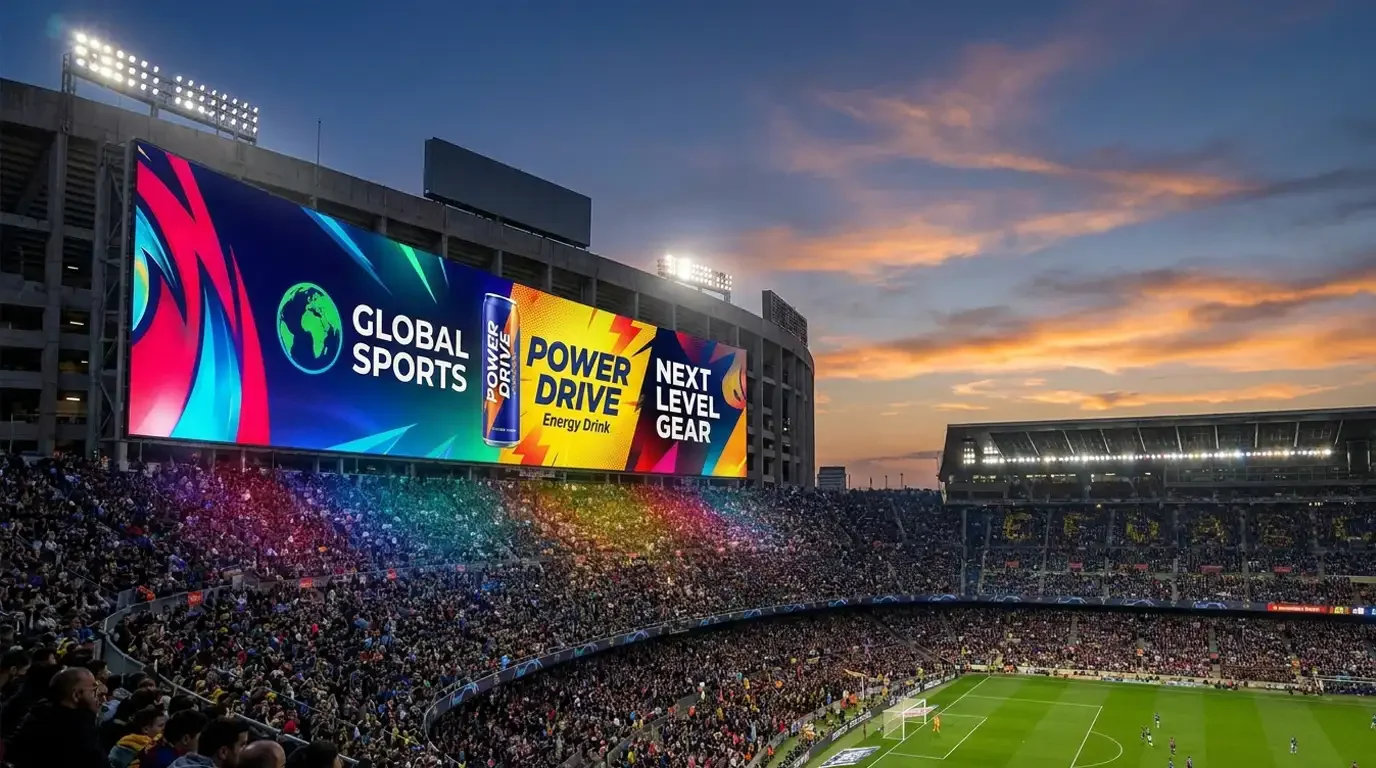
For the Barcelona football stadium, the outdoor LED screen helped create a more dynamic visual environment. Sponsors could display more flexible and eye-catching content, while stadium operators could communicate with audiences more efficiently.
Professional Installation Process
A successful outdoor stadium LED screen project requires a systematic installation process.
The general project workflow includes:
1. Site Survey
The team checks installation location, screen size, viewing distance, power availability, structure conditions, maintenance access, and environmental factors.
2. Solution Design
Based on the site survey, engineers prepare the screen specification, pixel pitch recommendation, cabinet layout, steel structure requirements, power distribution plan, and signal control plan.
3. Production and Testing
Before shipment, LED cabinets and modules are assembled and tested. Color consistency, brightness, grayscale, waterproof performance, and control system compatibility should be checked.
4. Structure Installation
The support structure is installed according to engineering drawings. Safety, flatness, load capacity, and wind resistance must be confirmed.
5. LED Cabinet Installation
Cabinets are installed row by row. The team checks alignment, connection stability, module condition, and cable routing.
6. Power and Signal Connection
Power cables, signal cables, receiving cards, processors, and control equipment are connected and tested.
7. System Calibration
The LED screen is adjusted for brightness, color temperature, grayscale, contrast, and content resolution.
8. Final Acceptance
The complete system is tested with real advertising content, full-white images, color images, video playback, and long-time operation before delivery.
This professional workflow helps ensure that the LED screen performs reliably after installation.
Application Value for Football Stadium Advertising
Outdoor stadium LED advertising screens bring strong commercial and operational value.
For sponsors, the screen provides high-visibility digital advertising. Dynamic video content is more attractive than printed banners and can be updated for different campaigns.
For stadium operators, the screen creates new advertising revenue opportunities. Multiple brands can share the same display at different times, increasing flexibility and commercial return.
For fans, the screen improves the matchday experience by showing useful information, exciting visuals, countdowns, and promotional content.
For event organizers, the display can support not only football matches but also concerts, ceremonies, public events, and community activities held inside or around the stadium.
Frequently Asked Questions
What pixel pitch is suitable for an outdoor football stadium LED advertising screen?
For outdoor football stadium advertising screens, common pixel pitches include P5, P6.67, P8, and P10. The best choice depends on viewing distance, screen size, content type, installation position, and budget.
How bright should an outdoor stadium LED screen be?
Outdoor stadium LED screens usually require high brightness, often around 5,000 to 7,000 nits or higher, depending on sunlight exposure and viewing conditions. Adjustable brightness is recommended for both daytime and nighttime events.
Why is waterproof protection important for stadium LED screens?
Stadium LED screens are exposed to rain, humidity, dust, and temperature changes. Waterproof modules, sealed connectors, and outdoor-rated cabinets help protect the display system and ensure stable long-term operation.
Can stadium LED screens display different advertisements at different times?
Yes. A digital LED advertising screen can display scheduled sponsor ads, matchday promotions, club branding, safety messages, and event information. Content can be updated more flexibly than printed banners.
What makes a professional outdoor LED screen solution reliable?
A reliable solution includes suitable pixel pitch, high brightness, weatherproof design, strong steel structure, stable power distribution, high refresh rate, proper signal control, safe installation, and regular maintenance planning.