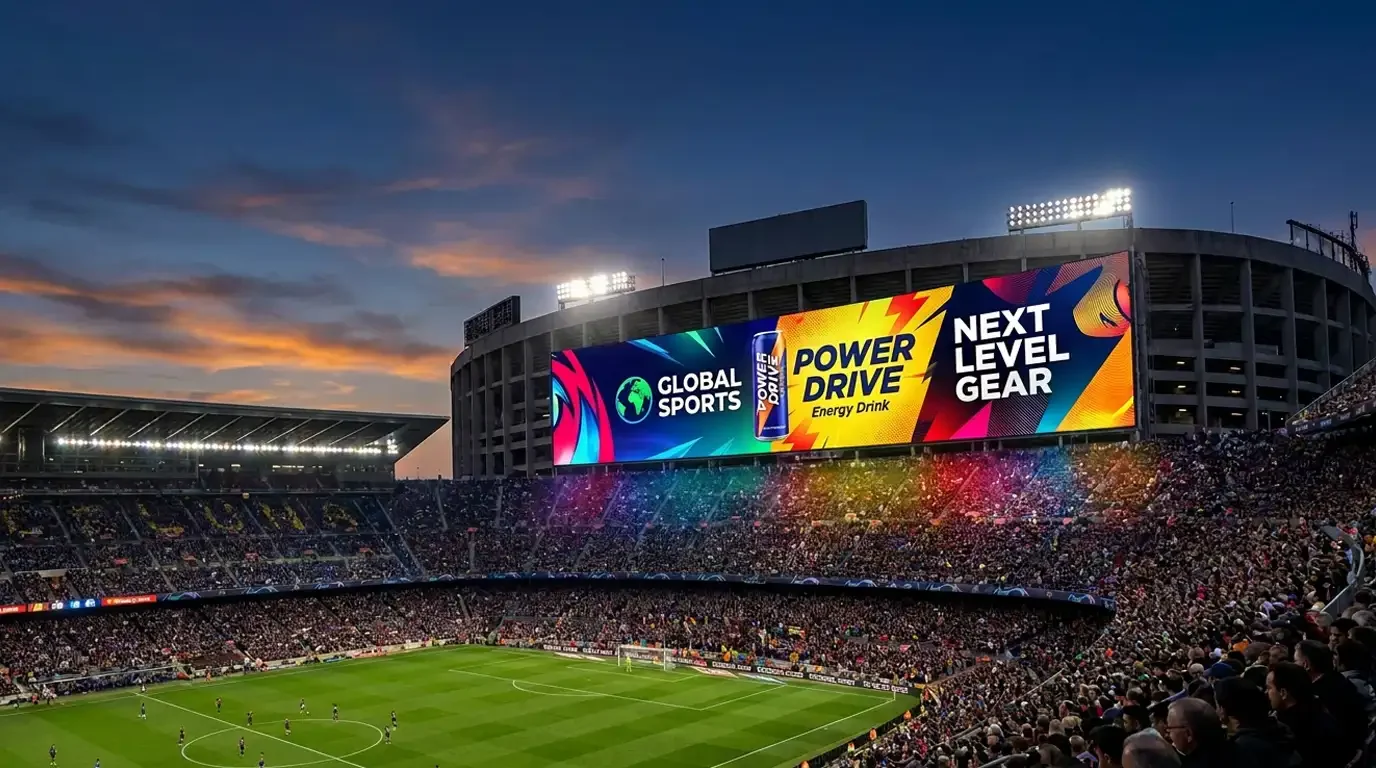



































Smart LED Pole Screen
Smart LED Pole Screen Solution for Urban Advertising
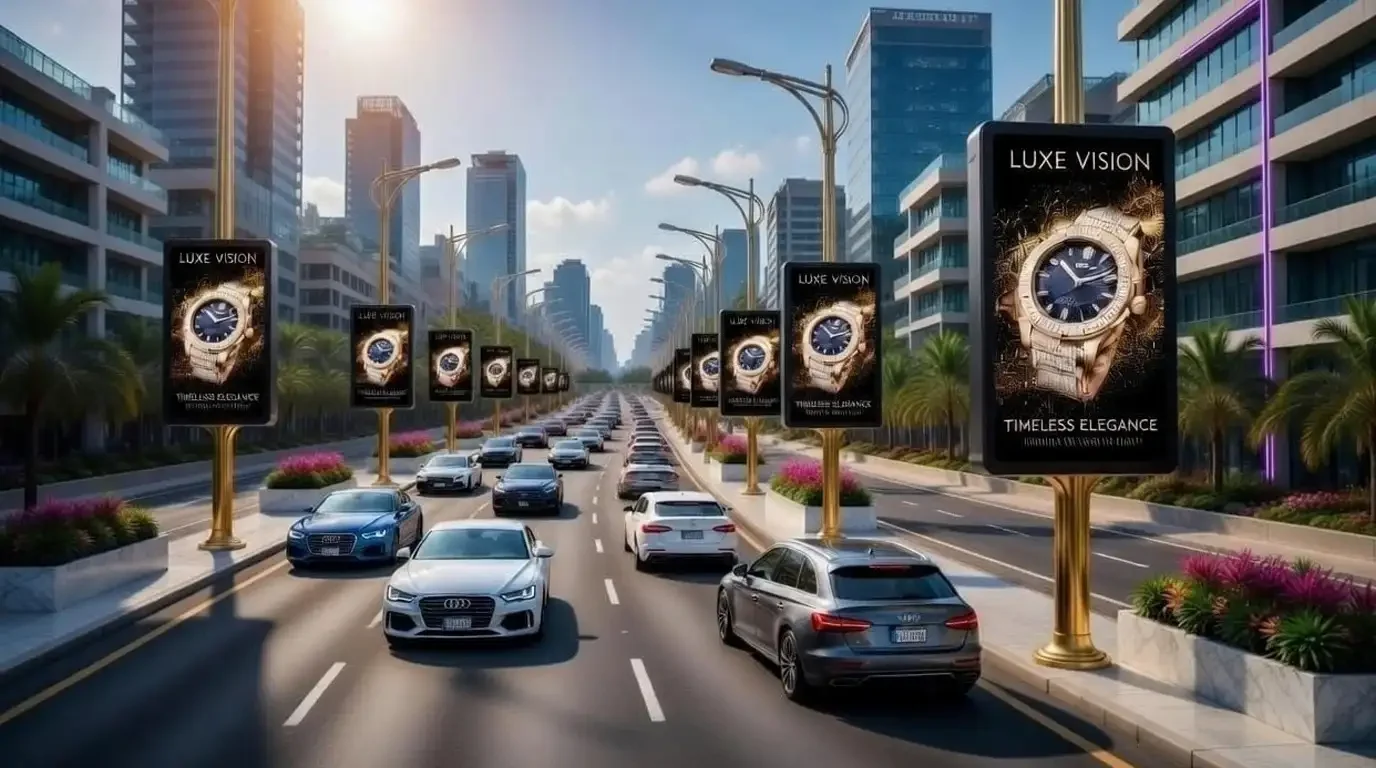
As cities continue to upgrade their public infrastructure, traditional outdoor advertising is being replaced by smarter, more flexible, and more efficient digital display systems. A Smart LED Pole Screen is one of the most practical solutions for urban advertising, public information release, and smart city communication. Installed on street light poles, smart poles, commercial road poles, or park lighting systems, it turns existing urban infrastructure into a powerful digital media network.
Unlike large outdoor billboards that require independent steel structures and large installation areas, LED pole screens are compact, highly visible, and suitable for distributed deployment across city roads, pedestrian streets, business districts, communities, scenic areas, and transportation routes. For advertising operators, municipal projects, commercial property owners, and smart city integrators, a professional LED pole screen solution can improve content delivery efficiency, advertising revenue, and public communication value.
Understanding the Role of Smart LED Pole Screens in Urban Media
Urban advertising is no longer only about placing a static poster in a high-traffic location. Modern city media requires fast content updates, multiple campaign scheduling, remote management, data-based operation, and integration with city information systems.
A Smart LED Pole Screen meets these needs by combining outdoor LED display technology with network control and centralized content management. It can display brand advertisements, event promotions, traffic notices, weather information, public service announcements, emergency messages, and commercial content in real time.
Because the screen is installed along city roads or pedestrian areas, it creates repeated exposure for drivers, passengers, cyclists, and pedestrians. This makes it especially suitable for high-frequency advertising and localized public information delivery.
Main Application Scenarios
A professional LED pole screen solution can be adapted to many urban environments. Different locations require different screen sizes, brightness levels, pixel pitches, mounting methods, and content strategies.
City Roads and Main Streets
On city roads and main streets, LED pole screens are used for outdoor advertising, public notices, road safety reminders, and city image promotion. Since viewers may be in moving vehicles, the content should be short, clear, and visually direct.
Commercial Streets and Shopping Areas
In commercial streets, pedestrian zones, shopping districts, and restaurant areas, LED pole screens can promote retail stores, restaurants, events, seasonal campaigns, and brand activities. These locations usually have closer viewing distances, so a smaller pixel pitch is recommended for better image detail.
Smart City and Smart Pole Projects
For smart city projects, LED pole screens can be integrated with smart poles, cameras, environmental sensors, Wi-Fi, emergency broadcast systems, and city management platforms. The screen becomes part of the public information network rather than only an advertising display.
Parks, Scenic Areas, and Cultural Districts
In parks, tourist attractions, cultural streets, and scenic areas, LED pole screens can display navigation information, event schedules, safety reminders, tourist services, and local promotions. The screen design should blend well with the surrounding environment.
Communities, Campuses, and Industrial Parks
For residential communities, schools, universities, and industrial parks, LED pole screens can be used for internal announcements, event notices, safety information, welcome messages, and local advertising.
Key Design Considerations for a Professional LED Pole Screen Solution
A successful LED pole screen project is not simply about choosing a screen size. It requires careful planning from structure to display performance, from power supply to remote operation, and from installation safety to long-term maintenance.
1. Screen Size and Display Format
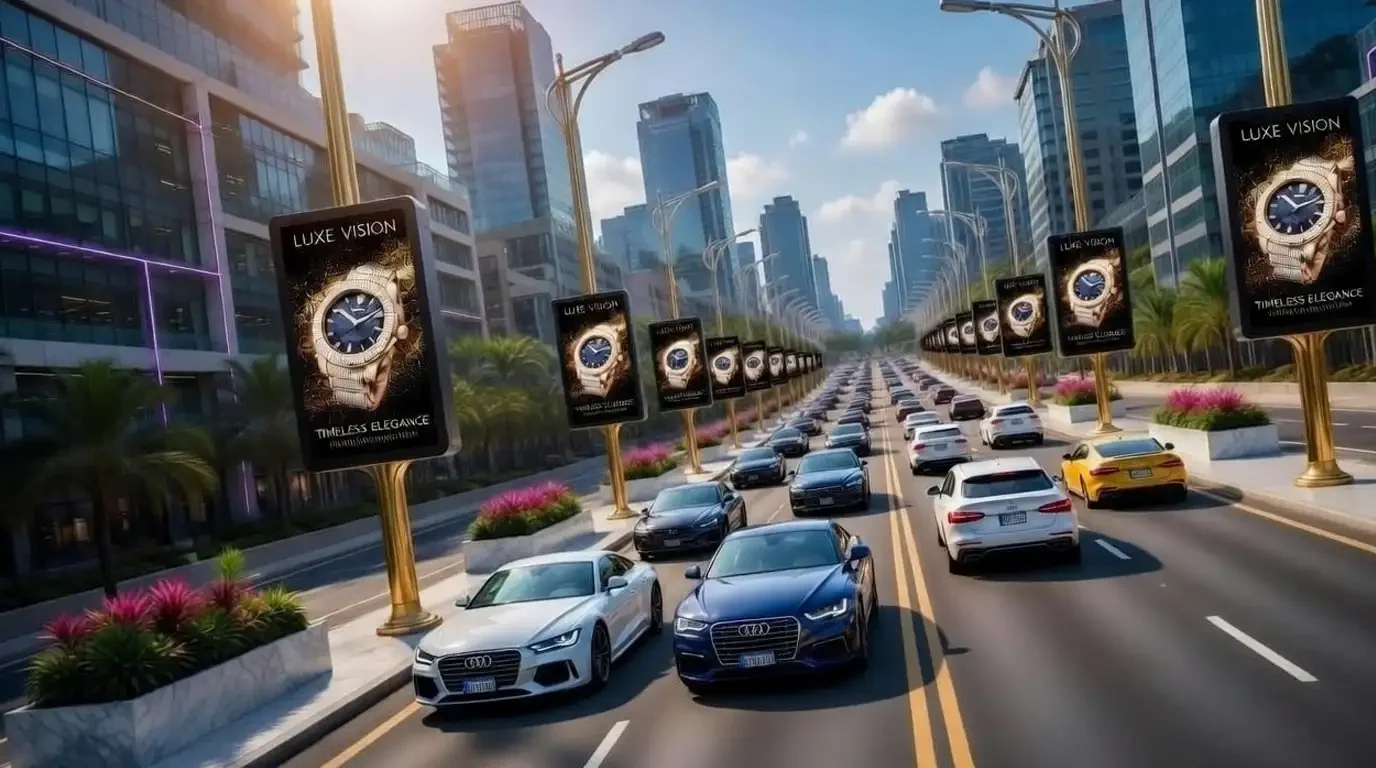
LED pole screens are usually designed in vertical formats because this matches the shape of street poles and city roads. Common designs include single-sided and double-sided displays.
A vertical screen is suitable for advertisements, city notices, promotional posters, videos, and short public messages. The size should be selected according to the pole height, road width, viewing distance, and local installation rules.
For high-traffic roads or two-way pedestrian areas, a double-sided LED pole screen is often more valuable because it increases visibility from both directions without requiring extra installation space.
2. Pixel Pitch Selection
Pixel pitch determines image clarity and suitable viewing distance. For LED pole screens, the viewing distance is usually closer than large highway billboards, so the pixel pitch should be selected carefully.
Common recommendations include:
P2.5 for close-viewing commercial streets and high-end pedestrian areas.
P3 for shopping districts, smart city streets, and urban public spaces.
P4 for main roads, parks, communities, and general outdoor advertising.
P5 for wider roads and longer viewing distances.
P6 for larger pole screens or locations where viewers are farther away.
For most city advertising projects, P3, P4, and P5 offer a good balance between image quality and cost. If the screen is installed in a premium commercial area where pedestrians view it at close range, P2.5 or P3 will provide better detail.
3. Brightness and Automatic Dimming
Outdoor LED pole screens must be bright enough for daytime visibility, especially in locations with strong sunlight or complex lighting environments. However, extremely high brightness is not always better. In urban spaces, excessive brightness at night may cause discomfort to pedestrians, drivers, and nearby residents.
A professional solution should include automatic brightness adjustment. With a light sensor, the screen can increase brightness during the day and reduce brightness at night or on cloudy days. This improves viewing comfort, saves energy, and helps meet urban light pollution control requirements.
4. Waterproof, Dustproof, and Anti-Corrosion Design
Since LED pole screens are installed outdoors all year round, environmental protection is essential. Rain, dust, humidity, UV exposure, temperature changes, and vehicle exhaust can affect the display if the structure is not properly designed.
A reliable outdoor LED pole screen should have:
IP65-level outdoor protection.
Waterproof LED modules.
Sealed cabinet structure.
Waterproof power and signal connectors.
Anti-corrosion coating.
UV-resistant materials.
Efficient heat dissipation.
Proper drainage design.
Lightning protection and grounding.
For coastal cities or high-humidity areas, anti-corrosion treatment should be strengthened to extend the service life of the cabinet and mounting structure.
5. Slim Cabinet and Lightweight Structure
Because the screen is installed on a pole, the cabinet must be slim, compact, and lightweight. A bulky screen may affect the appearance of the street and increase structural risk.
A good LED pole screen cabinet should have a clean appearance, reasonable weight, strong rigidity, and enough internal space for power supplies, receiving cards, cooling design, and wiring. For smart city projects, the screen appearance should also match the pole design and overall urban style.
6. Mounting Bracket and Wind Load Safety
The mounting bracket is one of the most important parts of a pole-mounted LED screen project. Even if the LED screen itself is high quality, an unsafe bracket can create serious installation risks.
The bracket design should consider pole diameter, pole material, screen weight, installation height, local wind load, bolt strength, anti-loosening measures, and maintenance access. For double-sided screens or larger display sizes, structural calculation is strongly recommended.
In public areas, safety must always come before appearance or cost saving.
Remote Control and Content Management
Remote content management is one of the main advantages of LED pole screen networks. Instead of replacing posters manually, operators can upload and schedule content from a central platform.
A professional content management system can support:
Video and image upload.
Playlist scheduling.
Different content by screen location.
Group management by area.
Timed playback.
Emergency message release.
Brightness control.
Screen status monitoring.
Fault alerts.
Remote restart and parameter adjustment.
For advertising companies, this means one operator can manage dozens or hundreds of screens from the office. For city management departments, it allows public information and emergency messages to be released quickly across different districts.
Power Supply and Network Planning
A stable power and network system is necessary for long-term operation. The power supply should be designed according to screen size, maximum power consumption, average power consumption, installation location, and local electrical standards.
For network connection, common options include wired Ethernet, Wi-Fi, 4G, or 5G. In many city road projects, 4G or 5G control is more practical because wiring is difficult across multiple locations.
The solution should also include surge protection, grounding, circuit protection, cable management, and safe power distribution. For large-scale projects, power consumption estimates should be calculated in advance to control operating cost.
Maintenance Strategy for Long-Term Operation
LED pole screens are often installed in multiple locations, so maintenance efficiency directly affects operation cost. A professional solution should be designed for easy service from the beginning.
Recommended maintenance features include:
Front maintenance design.
Modular LED panel replacement.
Quick access to power supply and control card.
Remote fault diagnosis.
Spare modules and spare power supplies.
Safe maintenance process.
Clear installation and wiring documentation.
Front maintenance is especially useful for urban roads where rear access is limited. It allows technicians to replace modules from the front side without removing the whole display.
Content Strategy for Better Advertising Performance
For LED pole screens, good hardware alone is not enough. Content must be designed for urban viewing behavior. Pedestrians and drivers often only have a few seconds to see the screen, so the message should be simple and direct.
Effective content should use:
Large text.
Short advertising copy.
Strong color contrast.
Clear product image.
Simple animation.
Brand logo visibility.
Short video loops.
Localized campaign messages.
Avoid too much text, small fonts, fast flashing effects, and complex layouts. A clean message is easier to understand and more effective for outdoor advertising.
Smart LED Pole Screen vs Traditional Pole Light Box
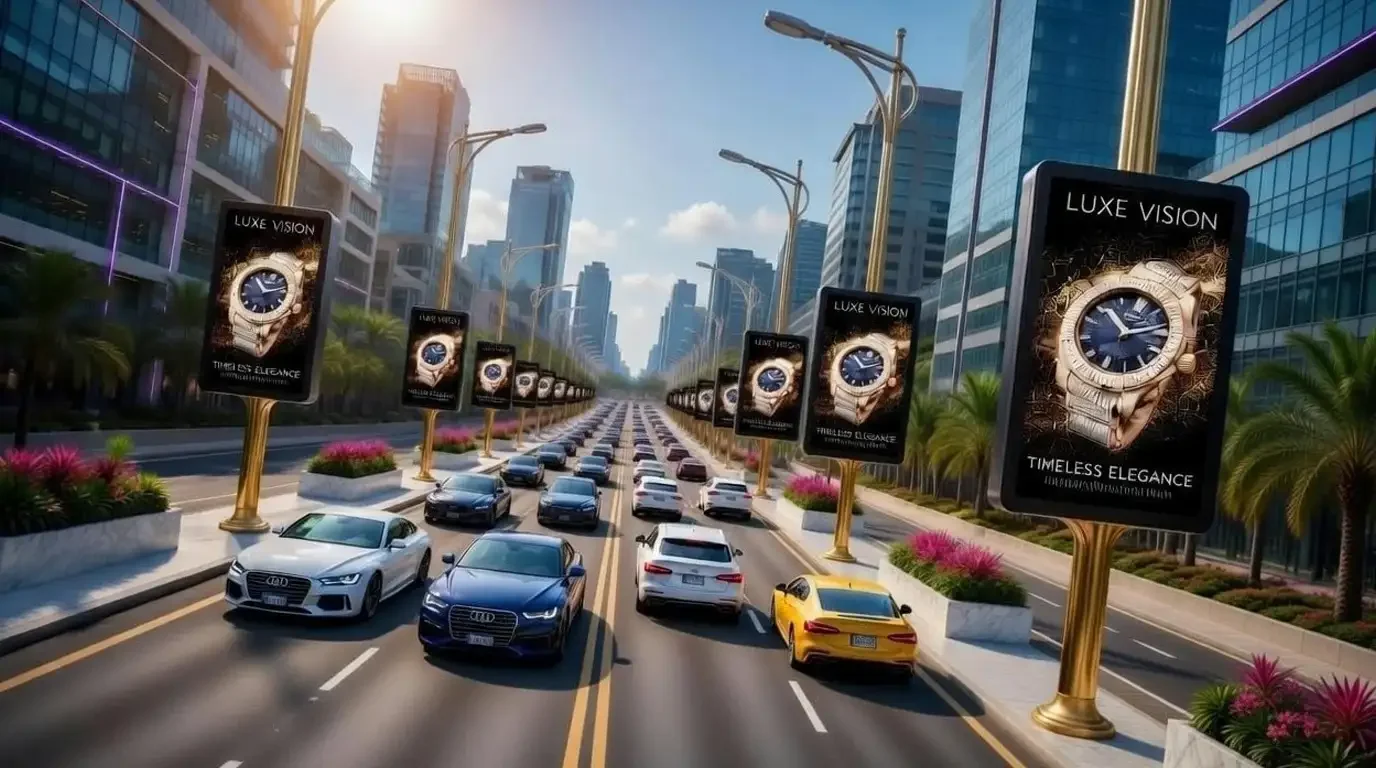
Compared with traditional pole light boxes, LED pole screens provide stronger flexibility and higher commercial value.
| Item | Smart LED Pole Screen | Traditional Light Box |
|---|---|---|
| Content format | Video, image, text, schedule | Static poster |
| Content update | Remote digital update | Manual replacement |
| Campaign flexibility | High | Low |
| Public information release | Supported | Limited |
| Night visibility | Adjustable brightness | Fixed lighting |
| Multi-location management | Centralized control | Manual operation |
| Advertising value | Higher | Lower |
| Maintenance | Electronic maintenance | Poster replacement |
For cities and media operators that need frequent content updates, LED pole screens are a more efficient long-term investment.
How to Build a Complete LED Pole Screen Project
A complete project usually follows these steps:
Confirm the installation location and pole condition.
Check viewing direction, road width, and audience distance.
Select single-sided or double-sided screen design.
Confirm screen size, pixel pitch, and brightness.
Design the cabinet, bracket, and installation structure.
Plan power supply, grounding, and network control.
Configure the content management platform.
Produce and test the LED screen.
Complete aging test and quality inspection.
Install the screen and bracket on site.
Configure software and playback system.
Adjust brightness and color performance.
Train the operator.
Provide spare parts and after-sales support.
For large-scale city deployment, it is better to start with a pilot installation. After testing brightness, stability, network control, and installation safety, the project can be expanded to more locations.