



































Top 5 Types of Indoor LED Displays in 2025: A Comprehensive Guide by Reissopt
At Reissopto, we are committed to providing you with the latest indoor LED display solutions. With advancements in technology, the indoor LED display market in 2025 has seen unprecedented innovation and a wide variety of options. This article will explore five main types of indoor LED displays to help you find the perfect solution for your needs.
Understanding Indoor LED Display Technology
Indoor LED displays have revolutionized visual communication through their superior brightness, color accuracy, and adaptability. Designed specifically for controlled environments, these displays maintain optimal visibility under any lighting conditions while offering energy-efficient performance. From corporate boardrooms to retail showcases, modern LED solutions deliver up to 250% higher contrast ratios compared to traditional LCD screens.
The Top 5 Types of Indoor LED Displays in 2025
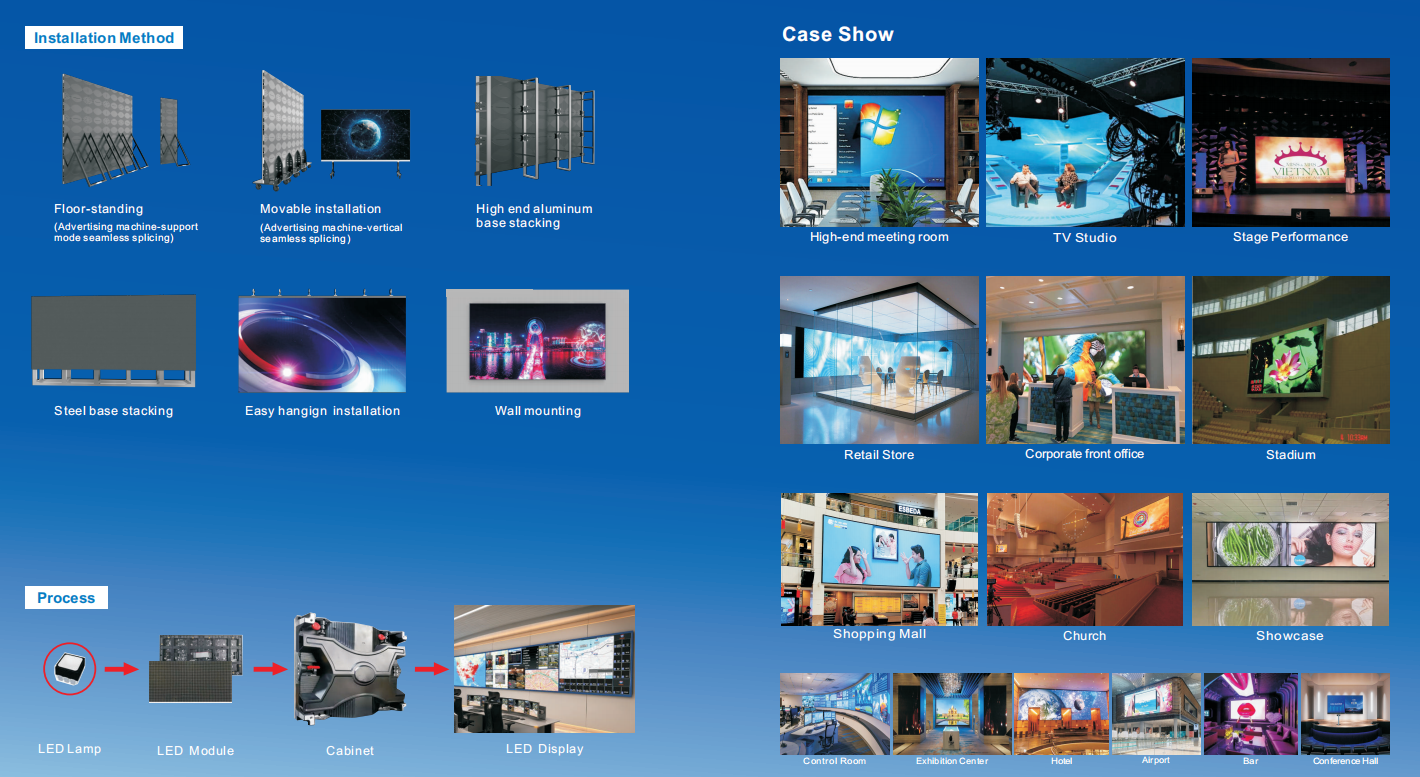
1. Fixed Installation LED Displays
Permanent solutions featuring:
High-density pixel configurations (P1.2-P2.5)
Seamless modular designs
24/7 continuous operation capability
Best For: Corporate lobbies, control rooms, houses of worship
2. Rental LED Screens
Event-focused solutions offering:
Quick assembly systems
Lightweight aluminum frames
Weather-resistant components
Event Applications: Trade shows, product launches, live performances
3. Transparent LED Displays
Innovative see-through technology with:
70-85% transparency rates
Natural light penetration
Space-saving depth (≤100mm)
Retail Uses: Storefront windows, museum exhibits, architectural integration
4. Flexible LED Screens
Curved display solutions featuring:
±15° bending capability
Ultra-thin profiles (8-12mm)
Customizable curvature radius
Creative Applications: Circular pillars, curved walls, immersive installations
5. Fine Pixel Pitch LED Displays
Premium viewing experience with:
Ultra-high resolutions (P0.9-P1.8)
4K/8K compatibility
Wide color gamut (≥110% NTSC)
Professional Use: Broadcast studios, luxury retail, executive briefing centers
Choosing Your Ideal Indoor LED Display: 4 Key Factors
1. Resolution Requirements
Match pixel pitch to viewing distance:
| Viewing Distance | Recommended Pixel Pitch |
|---|---|
| 0-3 meters | P1.2-P1.8 |
| 3-6 meters | P2.0-P2.5 |
| 6+ meters | P3.0-P4.0 |
2. Screen Size Considerations
Calculate optimal dimensions using:Screen Width (m) = Viewing Distance (m) / 0.3
3. Budget Planning
Cost comparison per square meter:
Standard fixed screens: 3,000
Fine pitch displays: 9,000
Transparent LEDs: 13,000
4. Content Strategy
Optimize refresh rates:
Static content: Minimum 60Hz
Video content: Recommended 120Hz+
Gaming/VR: Preferred 240Hz+
Key Benefits of Modern Indoor LED Displays
Enhanced Visual Performance: Achieve 600-1200 nits brightness with <1% color deviation
Energy Efficiency: Consume 35-45% less power than conventional displays
Durability: 120,000+ hour lifespan with <0.1% annual pixel failure rate
Flexible Control: Real-time content management via CMS integration
Industry-Specific Applications
Retail: 360° product visualization with touch-enabled displays
Education: Interactive 4K video walls for collaborative learning
Healthcare: Real-time data visualization in surgical suites
Hospitality: Dynamic digital signage in hotel lobbies
Future Trends in LED Technology
Emerging innovations include:
MicroLED displays with 0.6mm pixel pitch
AI-powered brightness adjustment systems
Self-healing circuit technology
Holographic display integration
Conclusion
Understanding the different types of indoor LED displays empowers businesses to select solutions that deliver up to 300% ROI through enhanced engagement. Whether implementing permanent installations in corporate environments or utilizing rental solutions for events, modern LED technology offers unparalleled versatility. For personalized consultation on implementing indoor LED solutions, contact our expert team at Reissopto