Table of Contents
Hot Recommendations
Get a Free Quote Instantly!
Talk to Our Sales Team Now.
In the past, audiences at concerts or brand activations were passive observers. Today, they’ve become part of the story. The catalyst for this shift? Interactive LED screen technology.
Across concert venues in Europe, corporate shows in the USA, and public festivals in the Middle East, interactive LED displays are redefining how people experience events — turning each viewer into an active participant through motion, gesture, and digital engagement.
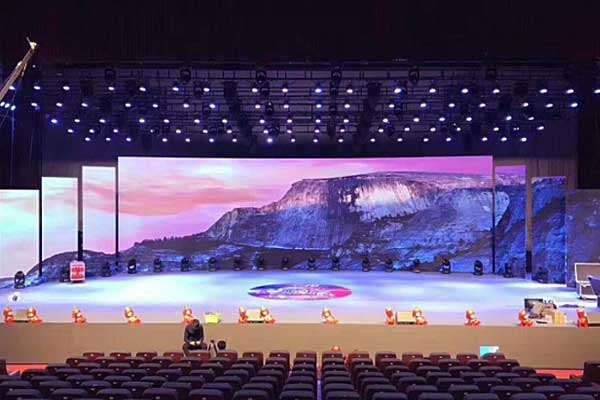
An interactive LED display goes beyond showing visuals. It responds — to touch, motion, sensors, or inputs from the audience or performers.
| Type | How It Works | Typical Application |
|---|---|---|
| Touch Interaction | Multi-touch overlay detects fingers or stylus input | Product launches, exhibition booths |
| Motion & Gesture Tracking | Infrared or camera sensors capture human movement | Live performances, dance stages |
| Audio Reactive Response | Visual patterns sync dynamically with music frequency | Concerts, DJ events |
| Smartphone Synchronization | Mobile app or QR code connects users to real-time visuals | Brand activations, sports fan zones |
| Pressure and Proximity Sensors | LED floor reacts to footsteps or body movement | Immersive art, interactive runways |
The result: a digital canvas that feels alive — responding directly to audience behavior.
Interactive LED technology transforms any event into a shared experience.
Concert Visuals: Audience clapping triggers light ripples across LED backdrops.
Corporate Presentations: Attendees swipe virtual charts on stage-sized touch walls.
Sports Fan Zones: Spectators compete in real-time reaction games on LED floors.
Public Installations: Pedestrians activate motion-based light patterns as they walk by.
This level of two-way engagement increases emotional connection and social sharing — crucial metrics for brands and event producers alike.
As an AV consultant from Berlin once said:
“Interactivity turns the LED wall from background decoration into a living element of the story.”
Behind the creative magic lies solid technical infrastructure. Professional event LED systems are built to deliver instant response with zero visual lag.
| Feature | Technical Detail | Purpose |
|---|---|---|
| Frame Rate / Latency | ≥60fps, <10ms latency | Ensures real-time visual feedback |
| Pixel Pitch | P1.9 – P3.9 indoor, P4.8 – P6.25 outdoor | Balances detail and viewing distance |
| Control Platform | Media server + signal switcher + interactive control software | Connects sensors, cameras, and playback |
| Input Protocols | DMX, Art-Net, OSC, or custom API link | Integrates with lighting and audio systems |
| Durability | Reinforced aluminum frames & anti-glare masks | Withstands physical interaction and repeated setup |
These systems are supported by processors like NovaStar VX600, Brompton Tessera SX40, or Colorlight X16, depending on scale and video format requirements.
A successful interactive LED production requires more than hardware — it’s a choreography of technology, design, and human movement.
Stage Design Integration: Curved or floor-mounted LED panels shape immersive environments.
Content Creation: Dynamic visuals developed in Unreal Engine, TouchDesigner, or Resolume respond to sensor data in real-time.
Lighting & Audio Synergy: LED visuals pulse in sync with DMX lighting cues or MIDI signals from instruments.
Performer Interaction: Dancers or speakers trigger pixel animations through motion-detection systems.
Together, these interactions bridge stage performance and audience participation, creating emotional resonance through shared response.
Interactive LED platforms must be robust enough for thousands of live interactions.
Anti-slip LED floor coverings resist moisture and ensure performer safety.
Shock-resistant modules absorb sudden impact or vibration.
Modular maintenance design allows fast front-service repairs on-site.
Thermal management systems prevent overheating during extended sessions.
All installations comply with CE, UL, and TÜV certifications, ensuring long-term stability for both touring and fixed events.
Project Scope: 80㎡ interactive LED floor for a global tech conference.
Technology Used: P3.9 LED modules with infrared motion sensors.
Integration: Linked to media server and Python-based motion tracking system.
Result: Visitors controlled digital waves and graphics through foot movement — tripling engagement time compared to static exhibits.
This project demonstrated how physical interaction + visual narrative creates a memorable experiential atmosphere for both attendees and brands.
As hybrid events and XR stages continue to evolve, interactive LED systems will drive the next wave of visual storytelling.
Gesture and AI Recognition: Machine learning identifies audience emotions and adjusts on-screen mood.
AR/VR Fusion: LED walls merge with XR tracking systems for virtual environments.
Multi-user Participation: Hundreds of devices connect to one shared LED display via Wi-Fi or 5G.
In this new era, the LED display is not just a surface — it’s a digital storyteller that listens, reacts, and connects.
An interactive LED integrates sensors, software, or touch overlays so it reacts to human motion, gestures, or input in real time.
Most setups use infrared or camera-based motion tracking, pressure sensors, or capacitive touch modules, depending on application type.
Yes. All modules feature anti-slip coatings, low-voltage operation, and CE/UL-certified safety protections.
Absolutely. Outdoor-rated LED systems (IP65 or higher) are designed to handle rain, sunlight, and fluctuating temperatures.
Unreal Engine, TouchDesigner, Notch, or Resolume are popular for producing real-time, sensor-driven LED visuals.



If you are interested in our products, please contact us promptly
Reach out to our sales team to explore customized solutions that perfectly meet your business needs and address any questions you may have.
Email Address:info@reissopto.comFactory Address:Building 6, Huike Flat Panel Display Industrial Park, No. 1, Gongye 2nd Road, Shiyan Shilong Community, Bao'an District, Shenzhen city , China
whatsapp:15217757270