



































LED Screen Stage Design Ideas
LED screen stage design has become a defining element of modern live events, exhibitions, concerts, conferences, and immersive brand experiences. From massive concert backdrops to fine-pitch corporate presentation walls, stage LED displays are no longer simple visual supports. They shape atmosphere, guide audience attention, and transform spatial perception through light, motion, and scale.
A well-designed LED stage environment combines visual storytelling, structural engineering, content strategy, and audience psychology. When brightness, resolution, layout, and synchronization are balanced, the stage becomes an integrated visual system rather than a collection of screens.
Understanding Stage LED Display Systems
Stage LED screens refer to modular digital display surfaces installed as primary or secondary visual elements in performance and presentation spaces. These systems are typically built from:
High-refresh LED panels
Lightweight rental cabinets
Precision rigging and truss structures
Video processors and control systems
Unlike fixed architectural displays, stage LED solutions prioritize fast installation, flexible configuration, and seamless scaling. Flat walls, curved surfaces, hanging cubes, floor LED panels, and panoramic backdrops are all part of the same modular ecosystem.
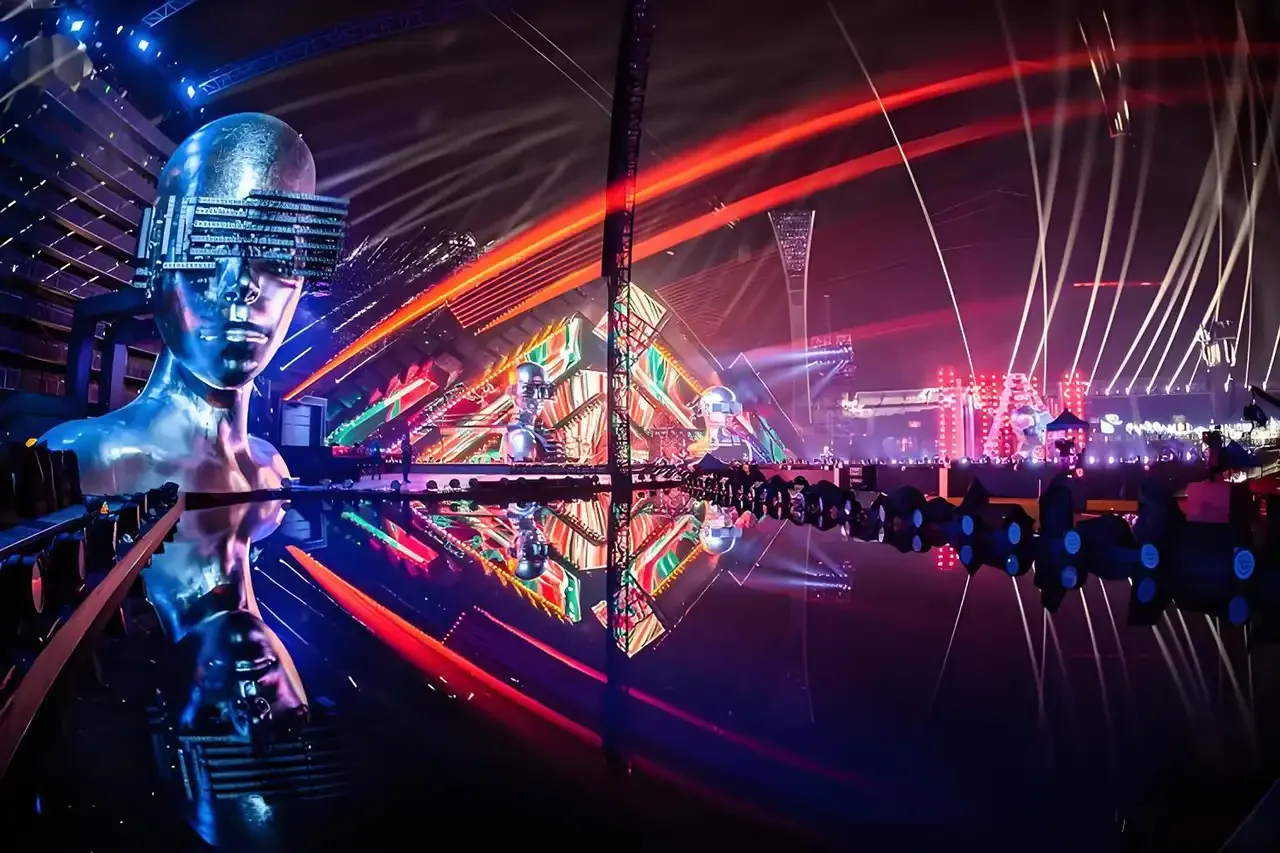
Common Stage LED Layout Concepts
Main Backdrop LED Wall
The most widely used configuration places a large LED wall at the rear of the stage. This surface becomes the visual anchor, displaying:
Dynamic motion graphics
Live camera feeds
Brand visuals
Environmental scenes
High brightness and uniform color reproduction ensure visibility under strong stage lighting.
Side Wing LED Screens
Vertical or angled LED columns on both sides of the stage expand the visual field and improve sightlines for wide venues. These screens are often synchronized with the central wall to create panoramic compositions.
Curved and Wraparound LED Stages
Curved LED structures introduce depth and immersion. Concave layouts draw the audience inward, while convex designs enhance visual presence for large arenas. Flexible LED modules allow cylindrical, wave-shaped, or arc-shaped forms that follow architectural contours.
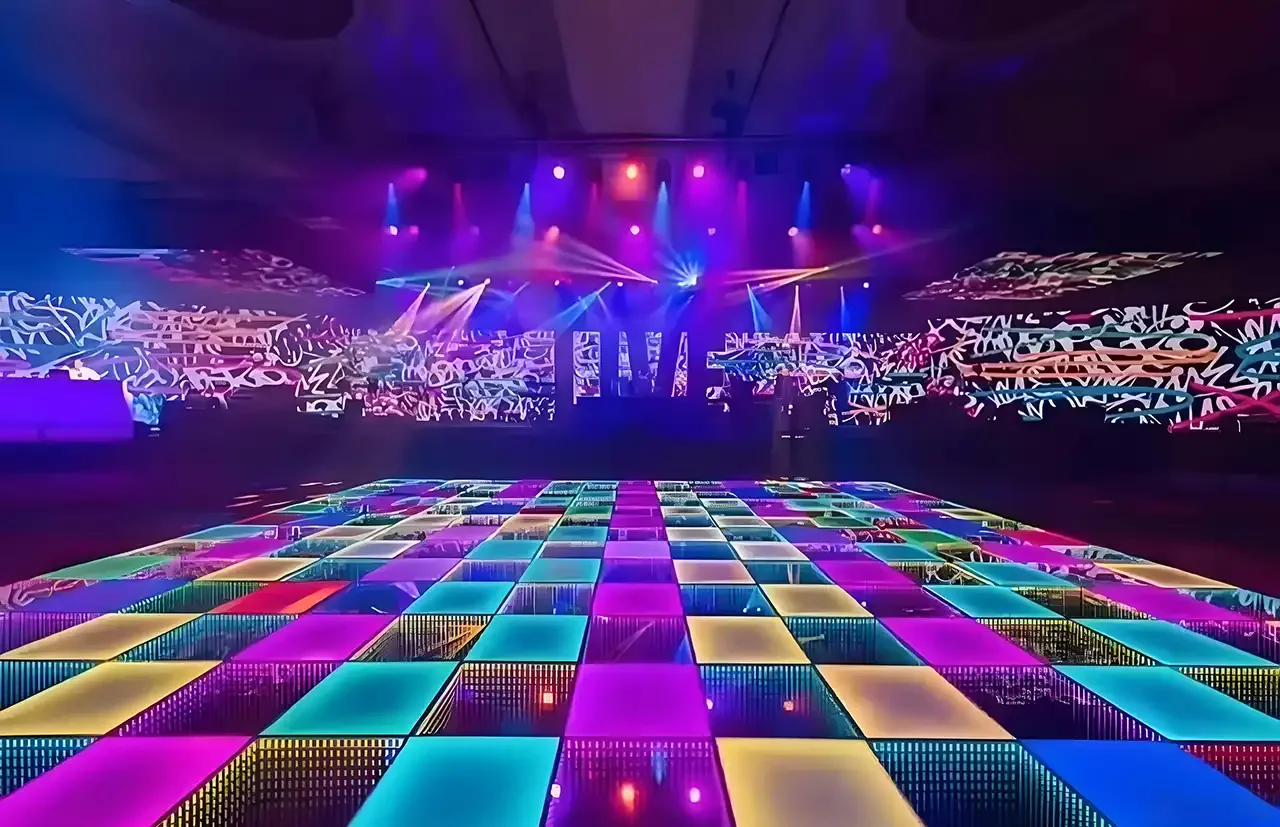
LED Floor and Interactive Stage Surfaces
LED floor panels transform the stage into a fully digital canvas. Performers appear to stand within animated environments, and interactive sensors can trigger real-time visual responses.
Hanging LED Cubes and Canopies
Three-dimensional LED structures suspended above the stage add vertical impact. These installations are frequently used in concerts and large ceremonies to create layered visual storytelling.
Creative LED Screen Stage Design Ideas
Immersive Panorama Stages
A continuous LED surface surrounding the performance area can simulate open landscapes, cityscapes, or abstract environments. The absence of visible edges enhances realism and audience engagement.
Architectural Integration
LED screens shaped to mirror stage architecture produce harmony between physical and digital elements. Arched portals, angled ceilings, and layered frames are commonly combined with custom LED geometry.
Dynamic Depth Layers
Multiple LED planes positioned at different depths create parallax effects. Foreground motion, mid-layer graphics, and background scenery generate a cinematic sense of space.
Transparent LED Backdrops
Semi-transparent LED meshes allow lighting and physical scenery to remain visible behind the display, blending digital and physical stage elements without blocking sightlines.
Technical Factors Influencing Stage LED Design
Pixel Pitch and Viewing Distance
Fine pixel pitch is selected for close-view environments such as conferences and exhibitions. Larger pitch values are suitable for arenas and outdoor stages where viewing distances are greater.
Brightness and Contrast
Stage lighting conditions require displays with sufficient luminance and stable contrast. Indoor stages typically use moderate brightness, while outdoor stages rely on high-nit LED panels for daylight visibility.
Refresh Rate and Camera Compatibility
Broadcast and live streaming demand high refresh rates and low scan line artifacts. Flicker-free performance ensures clean video capture and smooth motion reproduction.
Structural Load and Rigging Safety
Rigging systems must support the combined weight of LED panels, frames, and cabling. Curved or suspended structures require precise load calculations and redundancy.
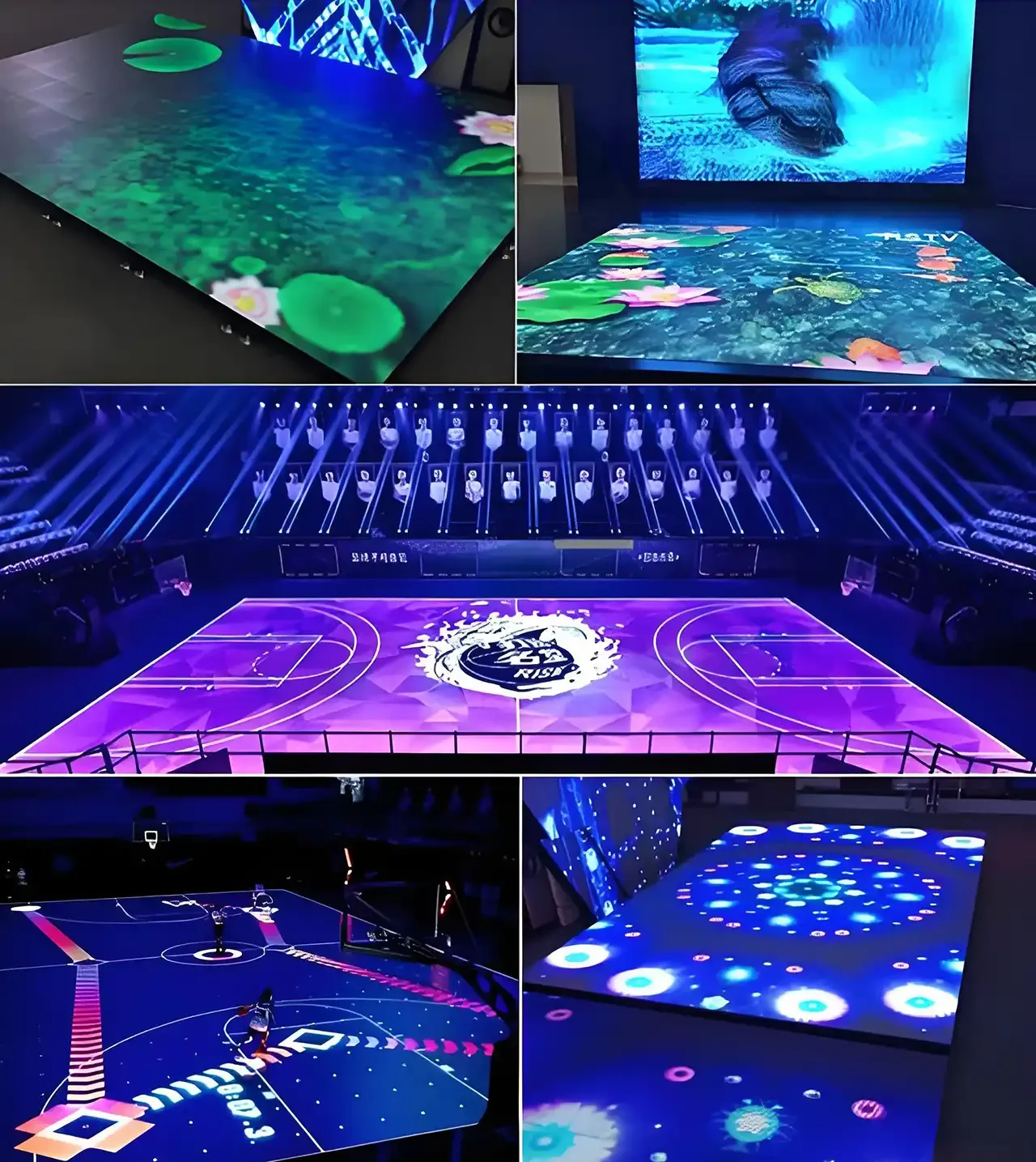
Indoor vs Outdoor LED Stage Concepts
Indoor stage designs focus on:
Fine resolution
Color accuracy
Lightweight modular frames
Quiet cooling systems
Outdoor stage designs emphasize:
Weatherproof enclosures
High brightness
Wind-resistant structures
Sunlight-readable contrast
Both environments benefit from modular adaptability and rapid setup.
Content Strategy for LED Stage Screens
Visual content must be tailored to screen shape, resolution, and audience perspective. Effective stage visuals often feature:
Large-scale motion elements
Simplified typography
High-contrast color palettes
Rhythm synchronized with music or speech
Curved and panoramic screens require specially mapped content to avoid distortion and maintain spatial coherence.
Integration with Lighting and Audio
LED stage screens function as part of a unified production system. Lighting cues, audio dynamics, and video transitions are synchronized through show control platforms. The result is a cohesive sensory experience rather than isolated visual effects.
Applications Across Event Types
Concert and Music Performances
LED stages support dynamic storytelling, real-time camera feeds, and immersive environments that evolve with each song.
Corporate Conferences and Product Launches
High-resolution LED backdrops reinforce branding, display keynote content, and create premium visual identity.
Exhibitions and Trade Shows
Modular LED stages attract attention from long distances and allow rapid content updates for multiple presentations.
Cultural Events and Ceremonies
Large-scale LED scenery replaces traditional stage sets, enabling flexible scene changes and thematic transitions.
Future Trends in LED Stage Design
Ultra-thin and lightweight cabinets for faster rigging
Flexible micro-LED modules for organic shapes
AI-assisted content synchronization
Higher dynamic range for more realistic visuals
Integrated interactive tracking systems
These developments continue to expand creative freedom and technical performance.
Frequently Asked Questions
How large can an LED stage screen be?
Stage LED displays can scale from a few square meters to hundreds of square meters, depending on venue size, structural capacity, and viewing distance.
Are curved LED stages difficult to maintain?
Modular construction allows individual panels to be replaced or serviced without dismantling the entire structure, even in curved configurations.
What resolution is suitable for conference stages?
Fine-pitch displays, typically between 1.5 mm and 3.0 mm, are commonly used for close-view corporate environments.
Can LED stage screens be reused for different events?
Rental-grade LED systems are designed for repeated assembly and disassembly, making them suitable for touring productions and multi-event venues.
How is color consistency maintained across large LED walls?
Factory calibration and on-site adjustment ensure uniform brightness and color temperature across all modules.
Do LED stage screens support real-time video input?
Modern control systems handle live camera feeds, graphics servers, and multi-source switching with minimal latency.
Conclusion
LED screen stage design has evolved into a multidisciplinary field where visual creativity, structural engineering, and digital control converge. Through modular flexibility, curved and three-dimensional layouts, high-performance display technology, and carefully coordinated content, modern stages become immersive environments rather than static platforms. As LED technology continues to advance, stage design possibilities will expand further, allowing events to communicate, perform, and inspire with unprecedented visual depth and precision.