Table of Contents
Hot Recommendations
Get a Free Quote Instantly!
Talk to Our Sales Team Now.
A Flexible Transparent LED Display is an advanced visual solution that combines flexibility, high transparency, and self-emissive LED technology. Unlike traditional rigid LED screens or conventional display panels, this type of display can bend, curve, and conform to irregular surfaces while maintaining clear, vibrant visuals and allowing light and background environments to remain visible.
Rather than functioning as a standalone screen, a flexible transparent LED display becomes part of the architectural or spatial design. It blends digital content with real-world surroundings, creating a layered visual experience that feels natural rather than intrusive.
The performance of a flexible transparent LED display is driven by the integration of three core technologies:
Micro LED packaging with precise pixel control
Flexible polymer-based substrates
Optimized transparent circuit layouts
LED pixels are arranged in a structured matrix on a transparent or semi-transparent flexible base. Ultra-thin circuitry minimizes visual obstruction, while brightness and contrast are carefully balanced to ensure strong visibility even in well-lit environments.
Thanks to its flexible construction, the display can be shaped to fit curved glass, cylindrical columns, or custom architectural forms without compromising image quality.
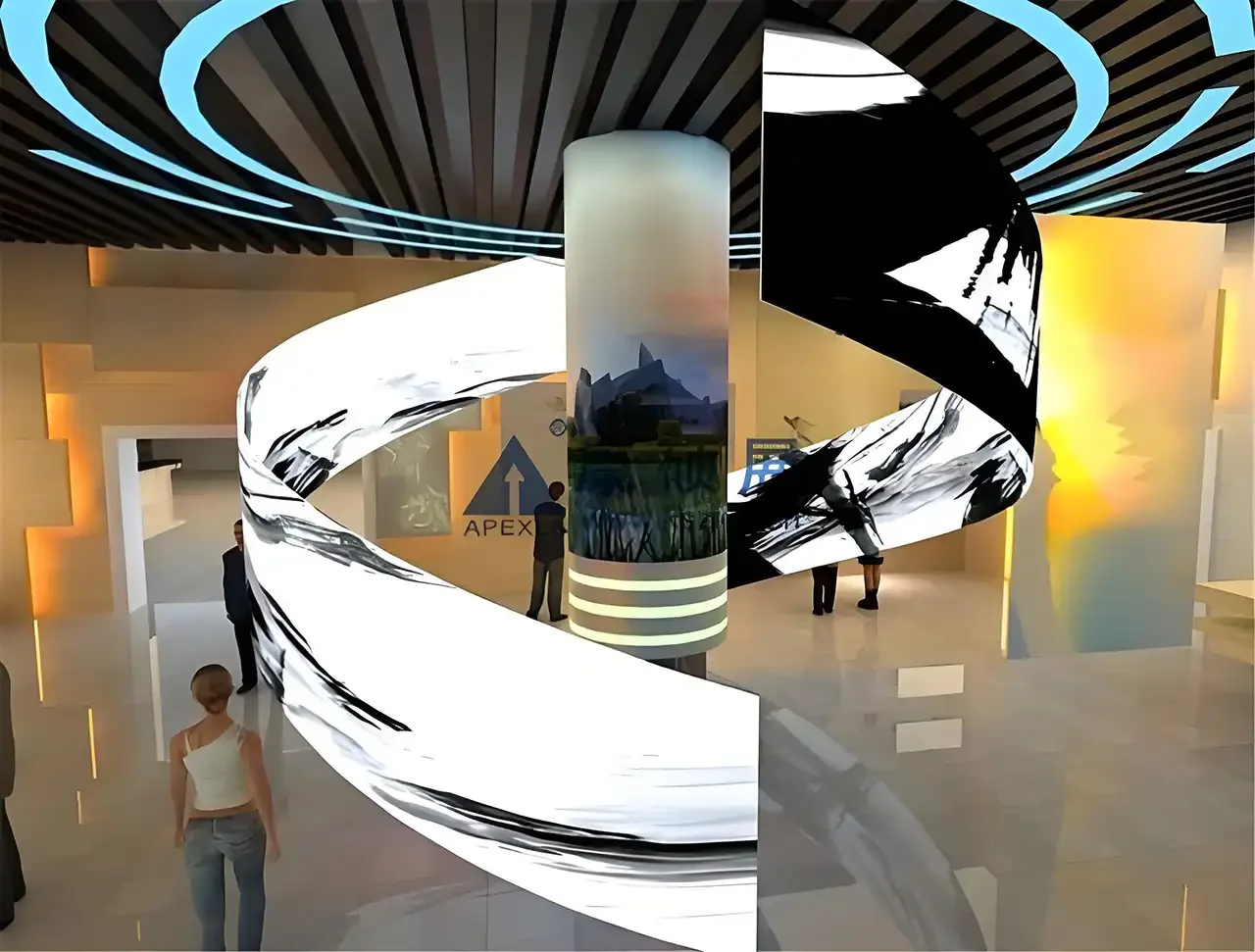
Transparency levels typically range from 60% to 90%, allowing natural light to pass through and preserving clear sightlines. This makes the display especially suitable for storefront windows, glass facades, and open exhibition spaces.
The ability to bend and adapt to non-flat surfaces removes the limitations of traditional rectangular screens. Designers gain greater creative freedom when working with curved walls, columns, or suspended installations.
As a self-emissive technology, flexible transparent LED displays deliver higher brightness than projection or LCD-based solutions. They remain clearly visible during daytime use while consuming less power and offering a longer operational lifespan.
Most systems use modular panels, allowing individual sections to be replaced or serviced without dismantling the entire display. This reduces maintenance costs and supports long-term commercial operation.
Transparent LCD screens rely on backlighting, which limits brightness and transparency. Flexible transparent LED displays generate their own light, resulting in better contrast, stronger visibility, and a wider range of usable environments.
Rigid LED glass screens offer transparency but lack adaptability. Flexible transparent LED displays excel in curved installations, lightweight structures, and creative architectural designs where rigid panels are not practical.
Projection systems are highly sensitive to ambient light. Transparent LED displays maintain consistent image quality regardless of lighting conditions, making them more reliable for commercial and public spaces.
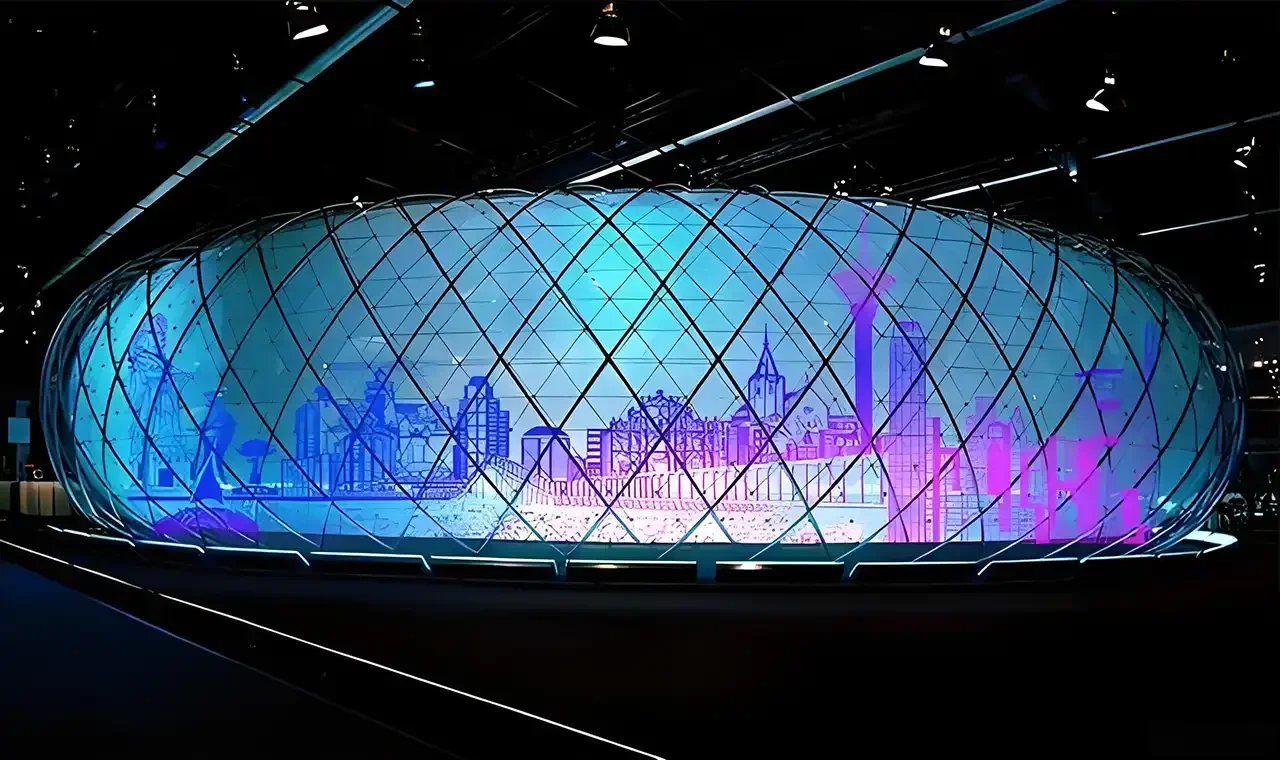
Installed behind storefront glass, flexible transparent LED displays showcase dynamic content without blocking product visibility. This approach enhances visual appeal and helps attract foot traffic while maintaining an open, premium look.
When integrated into glass facades, the display delivers striking visuals at night while remaining nearly invisible during the day. Buildings retain their architectural transparency while gaining a powerful media layer.
Museums, galleries, and experience centers use transparent displays to overlay digital information on physical exhibits, adding depth and interactivity without overwhelming the space.
Lightweight and flexible construction makes these displays ideal for stage backdrops, art installations, and layered visual effects in live performances.
Airports, railway stations, and commercial complexes benefit from transparent information displays that communicate content clearly without obstructing visibility or movement.
Pixel pitch determines image clarity and optimal viewing distance. Smaller pixel pitches provide sharper images for close-range viewing, while larger pitches suit long-distance applications.
Higher transparency reduces pixel density, which can affect image detail. Performance depends on finding the right balance between light transmission and visual impact for each application.
High refresh rates ensure smooth motion, while higher grayscale levels produce more natural color transitions—both essential for premium commercial displays.
Depending on whether the display is used indoors or in semi-outdoor settings, protection against dust, humidity, and temperature variation plays a critical role in long-term stability.
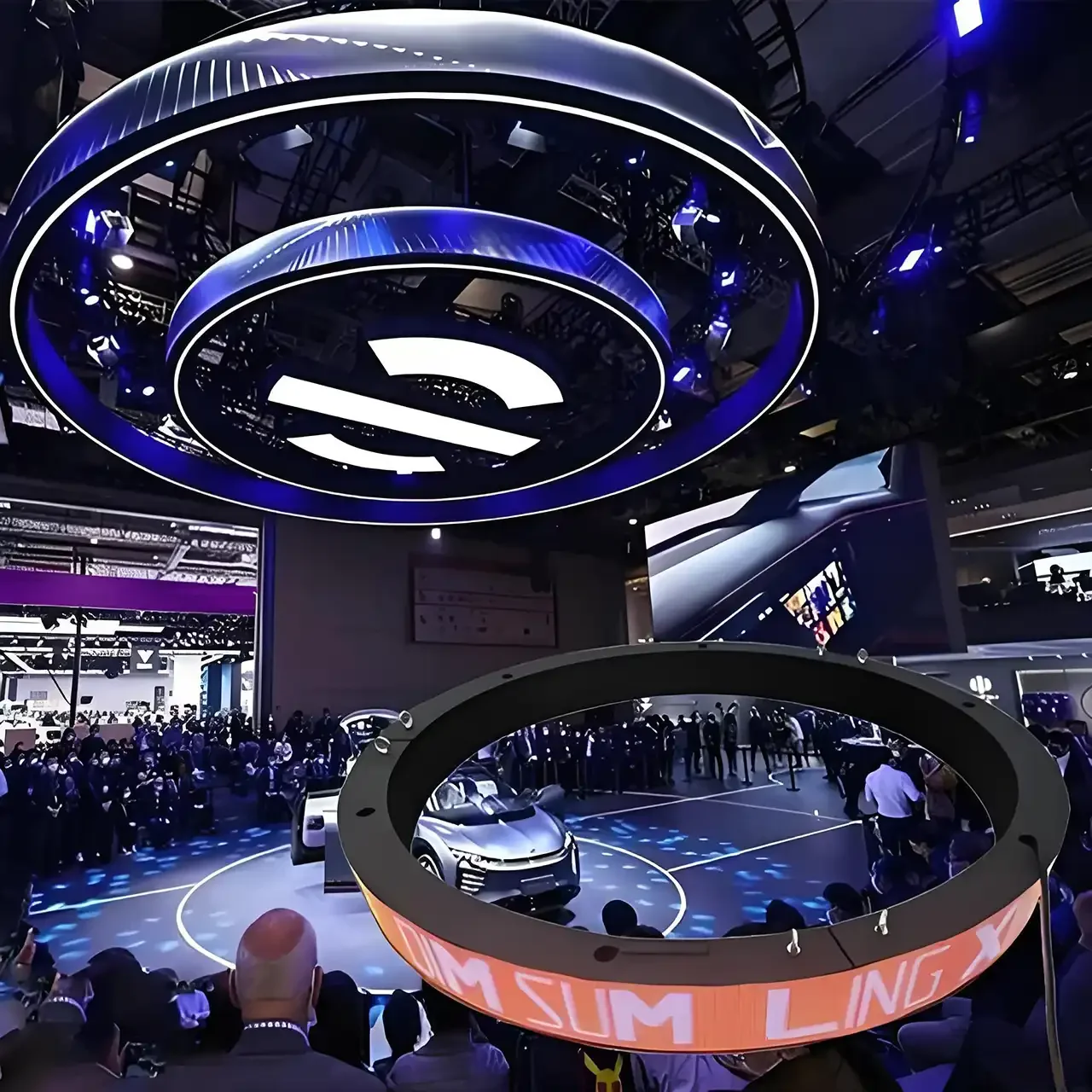
Ideal for storefronts, exhibitions, and stage environments, suspended systems create a floating visual effect while preserving open space.
Displays can be mounted directly onto glass or curved surfaces, creating an almost invisible digital layer that blends seamlessly with the structure.
For permanent installations, frame-based systems offer strong structural support and easier access for maintenance.
The cost of a flexible transparent LED display is influenced by LED quality, flexible materials, control systems, and the level of customization required. While the initial investment may be higher than standard displays, long-term value often outweighs upfront costs.
In high-traffic commercial locations, these displays tend to deliver stronger engagement, improved brand visibility, and higher conversion potential, resulting in a compelling return over time.
Advances in LED packaging continue to reduce pixel size while maintaining or improving transparency and brightness.
Ongoing improvements in flexible materials and circuit design are driving further reductions in weight and thickness, simplifying installation and transport.
Future systems increasingly integrate with sensors and data platforms, enabling content to respond to time, audience movement, or environmental conditions in real time.
Viewing distance and content requirements
Desired level of transparency and brightness
Structural and installation constraints
Long-term maintenance and scalability
Careful evaluation of these factors ensures the display delivers both visual impact and operational reliability.
Beyond conveying information, transparent LED displays help shape brand perception. Their clean, futuristic appearance naturally attracts attention and conveys innovation, making them a strong visual statement in competitive environments.
In premium commercial and public spaces, they often become focal points that differentiate brands and enhance overall spatial design.
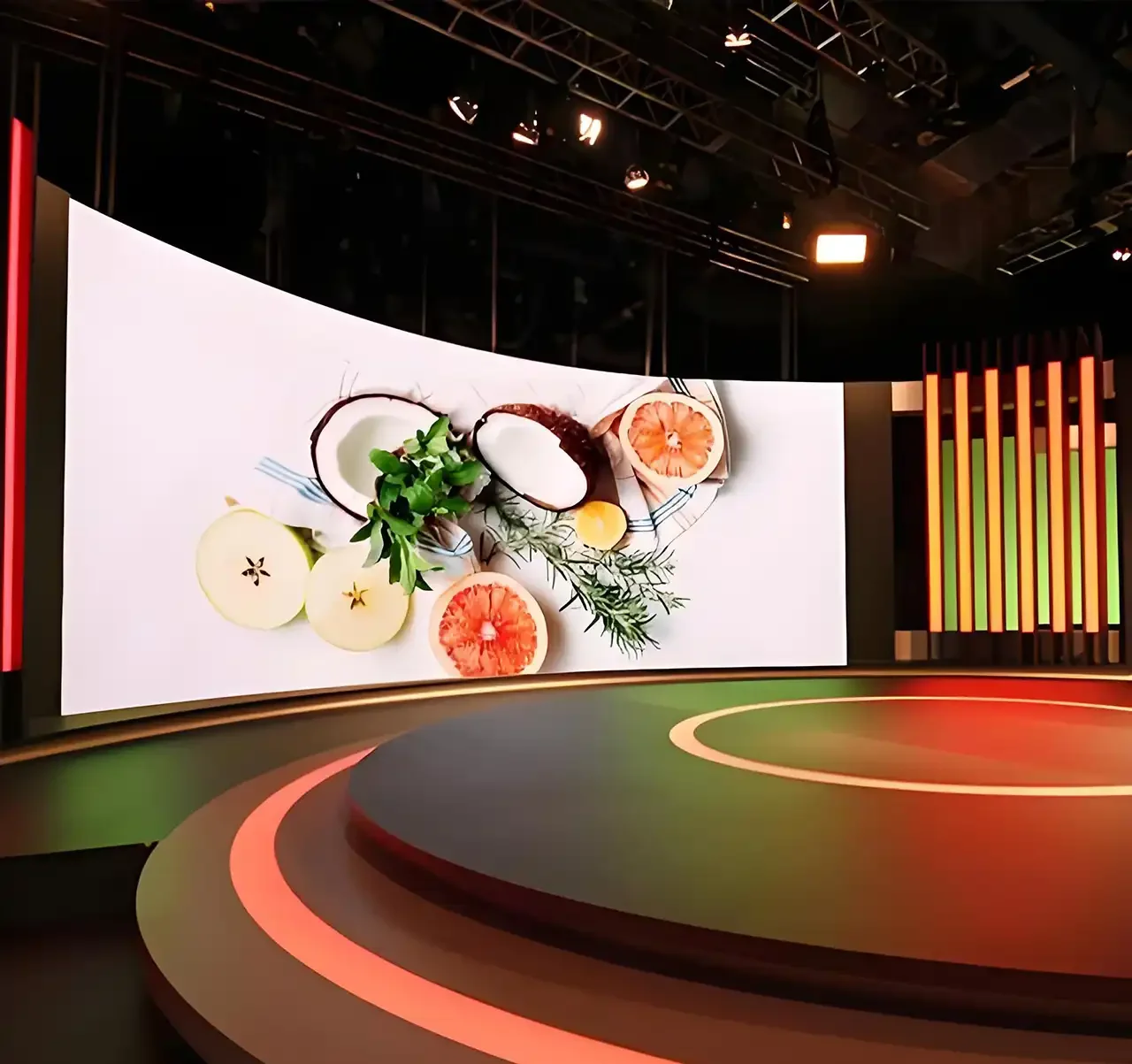
The defining difference lies in flexibility. Standard transparent LED screens are typically rigid, while flexible transparent LED displays can bend and conform to curved or irregular surfaces, making them far more versatile in architectural and creative applications.
When designed correctly, these displays have minimal impact on light transmission and sightlines. High transparency allows the background environment to remain visible, with digital content appearing as an overlay rather than an obstruction.
Yes. With proper thermal management and brightness control, they are well suited for continuous operation in retail, exhibition, and public environments.
Installation methods are adaptable to different structures, and modular designs simplify maintenance. Individual modules can be serviced or replaced without dismantling the entire system.
They perform best in high-end retail windows, glass building facades, brand showrooms, stages, and immersive environments where visual impact and spatial transparency are equally important.
Flexible Transparent LED Displays represent a shift in how visual content interacts with physical environments. By combining transparency, flexibility, and high-performance LED technology, they allow digital messaging to coexist naturally with architecture. As adoption grows and technology continues to evolve, these displays are set to play an increasingly important role in modern visual communication.


If you are interested in our products, please contact us promptly
Reach out to our sales team to explore customized solutions that perfectly meet your business needs and address any questions you may have.
Email Address:info@reissopto.comFactory Address:Building 6, Huike Flat Panel Display Industrial Park, No. 1, Gongye 2nd Road, Shiyan Shilong Community, Bao'an District, Shenzhen city , China
whatsapp:15217757270